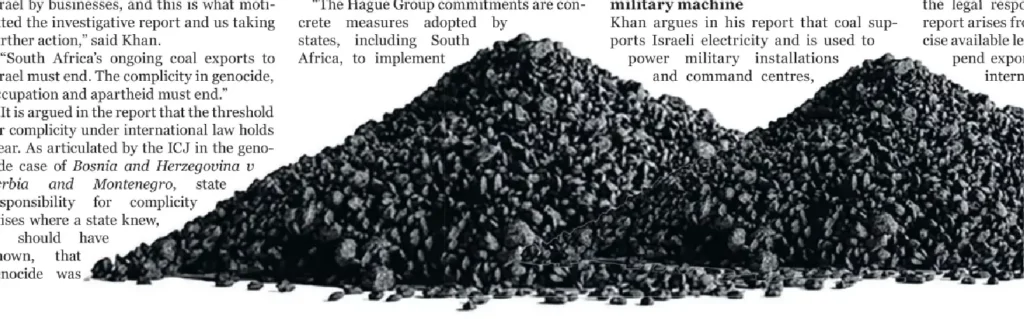
South Africa boosts coal exports to Israel despite taking it to court in genocide case
Critics have slammed the South African government, accusing it of hypocrisy, because of the country’s coal exports to Israel that have accelerated in the past two years despite Pretoria’s genocide case against Israel at the International Court of Justice (ICJ).
An extensive report titled Fuelling Genocide, authored by Sirhaan Ché Khan, an international law expert and human rights lawyer, was handed to representatives of the Department of Trade, Industry and Competition (DTIC) in Pretoria on 23 March for the attention of Minister Parks Tau.
The report was commissioned by the South African Boycott, Divestment, Sanctions (BDS) Coalition, a group of local organisations critical of Israel’s treatment of Palestinians.
“We started working on the 264-page document last August following collective frustration at the South African government’s continued coal exports to Israel and its initial refusal to engage with its critics over the matter,” Khan said.
However, DTIC spokesperson Kaamil Alli told Daily Maverick that “it was important to note the official position of the South African government on this matter, which is reflected in our case at the ICJ”.
But this is exactly what has angered critics of the government. “Our frustration was exacerbated by the discrepancy between the position of the South African government and the growing exports of coal supplies to Israel by businesses, and this is what motivated the investigative report and us taking further action,” said Khan.
“South Africa’s ongoing coal exports to Israel must end. The complicity in genocide, occupation and apartheid must end.”
It is argued in the report that the threshold for complicity under international law holds clear. As articulated by the ICJ in the genocide case of Bosnia and Herzegovina v Serbia and Montenegro, state responsibility for complicity arises where a state knew, or should have known, that genocide was imminent or occurring and nonetheless provided material aid that had a substantial effect on its commission.
“This report details how South Africa’s coal trade with Israel amounts to such material aid for an ongoing genocide and unlawful occupation,” said Khan.
SA’S exports to Israel
South Africa exports a variety of goods to Israel, including fruit, vegetables, precious stones, steel, chemical products and other miscellaneous goods. Its imports from Israel primarily consist of industrial, chemical and agricultural products.
South Africa’s exports to Israel have declined over the past decade, according to Trading Economics, but coal exports are the exception. Reuters reported that South Africa had boosted its coal exports after Colombia ceased all its coal exports in August 2025 in the wake of the Gaza genocide.
Both Colombia and South Africa, hitherto the main exporters of coal to Israel, with South Africa still one, are fierce critics of Israel and are members of The Hague Group, which was formed to support rulings of the ICJ and the International Criminal Court in relation to the Israeli-palestinian conflict.
“South Africa issued a joint statement with Colombia reaffirming their commitment to ensure that their trade, financial systems and corporate activities do not contribute to violations of international humanitarian law in Palestine,” said Khan.
“The Hague Group commitments are concrete measures adopted by states, including South
Africa, to implement their obligations under international law,” he added.
The Hague statement outlined the agreed actions to prevent trade, financial and supply chain activity from contributing to genocide and other international crimes, and demonstrates that South Africa’s continued coal exports directly contradict these commitments and the legal duties they reflect.
BDS monitored at least 17 vessels being loaded at Richards Bay, between October 2023 and December 2025, which transported at least 2.99 million tonnes of coal to Israel, according to the South African Revenue Service.
This tracking was made possible by activists and researchers who monitored ship movements and verified coal cargoes, often in real time, using open-source maritime intelligence tools.
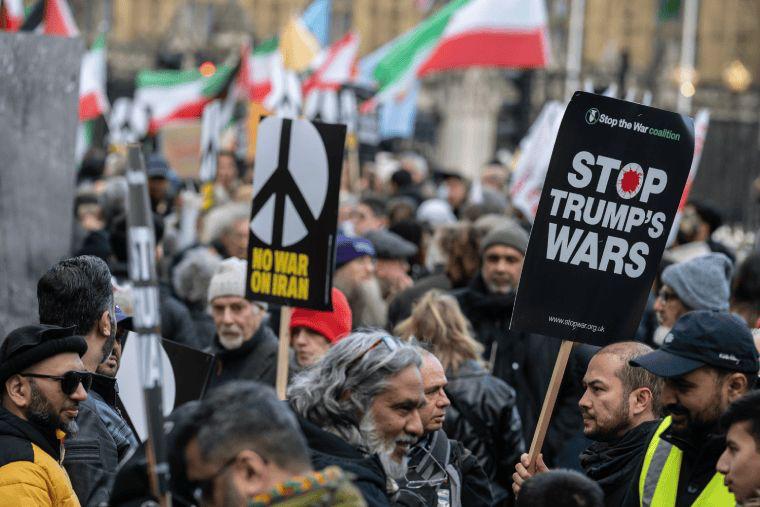
The shipments were unloaded at the ports of Hadera and Ashkelon in Israel, prompting wide-scale protests and public condemnation at Glencore and DTIC premises.
“The Hague statement emphasised the duty of states to review and, where necessary, suspend trade relationships, supply chains and economic activities that risk facilitating war crimes, crimes against humanity or genocide, and called on governments to employ all available regulatory and legal mechanisms to prevent corporate complicity in such acts,” said Khan.
Invisible backbone of Israel’s
military machine
Khan argues in his report that coal supports Israeli electricity and is used to power military installations
and command centres, weapons manufacturing facilities, drones, tanks, checkpoints and surveillance systems operated by the Israel Defense Forces.
“Electricity is the invisible backbone of Israel’s military machine. Every dimension of its modern warfare apparatus … depends on uninterrupted electrical supply, including Israel’s chilling artificial intelligence systems and algorithms that sort Palestinians by ‘suspicion level’ and determine targeting for drone strikes,” said Khan.
After meeting with the activists outside the DTIC’S office in Pretoria, Alli told Daily Maverick that “the issues raised in the meeting … remain complex and are handled with a great degree of sensitivity”.
But Khan said that previous objections to the shipping of coal included fears that there could be a legal backlash from business corporations involved in the exports.
“South Africa has detailed knowledge of what is happening in Gaza and the Israelioccupied West Bank following its ICJ case,” Khan told Daily Maverick.
“And being afraid of a backlash from mining companies is not an excuse to abandon its legal obligations under international law. The continued exports amount to material support for internationally wrongful acts and place South Africa in breach of its international obligations,” he added.
Asked whether the DTIC would be investigating the matter and taking further action, Alli said it “should be noted that our sister department [the Department of International Relations and Cooperation] as well as Cabinet in general play an integral role in this, and so consultations with them will also have to be undertaken on this matter.
“The document handed to the department [last week] is extensive and will require time to process internally before an official position can be taken by the minister on the contents. As a result, we cannot comment on the details therein,” said Alli.
Khan confirmed that the report would also be handed to other relevant government departments.
“These exports are undertaken by private corporations operating within South Africa’s jurisdiction using state-regulated infrastructure, ports, licensing systems and export permissions,” said Khan.
“The South African state does not itself mine or sell the coal, but it exercises decisive regulatory authority over whether such exports may lawfully occur. Accordingly, the legal responsibility addressed in this report arises from the state’s failure to exercise available legal powers to prevent or suspend exports that risk contributing to internationally wrongful acts,”
said Khan.