If the United States were truly motivated by the protection of Nigerian Christians, its actions would follow the geography of human suffering. But they do not. Instead, what we see is a familiar imperial pattern: war waged selectively, morality applied unevenly, and suffering acknowledged only when it aligns with strategic interest.
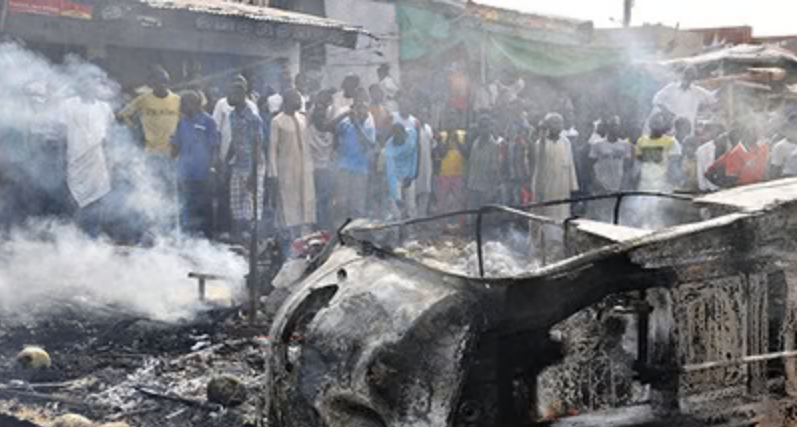
Numerically, most victims of insurgent violence are Muslims. Hundreds of villages have been destroyed in Borno and Yobe. In Katsina and Zamfara, rural communities have been emptied by kidnappings, mass killings, hunger, and displacement. Most residents of these communities are Muslims. Yet when foreign intervention is discussed, the suffering of these populations is either minimized or erased, while the language of “protecting Christians” is elevated as a moral justification.
This selective framing is not accidental. Mahmood Mamdani has argued that the global War on Terror depends on simplifying complex local realities into narratives that legitimize external power. In this logic, some victims are rendered visible and morally useful, while others are rendered invisible and politically inconvenient. Muslim suffering in northern Nigeria falls into the latter category. It does not fit neatly into a story that justifies bombing, so it is ignored.
The result is a dangerous distortion of reality. Nigeria’s crisis is not a religious war. It is a political and socio-economic catastrophe rooted in state failure, corruption, inequality, and decades of neglect. By presenting U.S. military action as a defence of Christians, the deeper causes of violence are concealed, and communal divisions are sharpened.
Nigeria’s own history sharpens this tragedy. In early December, 2025, Nigeria intervened militarily in the Benin Republic to defeat the coup, presenting itself as a regional power capable of defending political norms. Yet today, Nigeria struggles to secure its own territory without external interference. This contradiction exposes what many African scholars describe as hollow sovereignty: a state that retains international recognition but lacks the internal capacity to protect its people or resist imperial management of its crises.
None of this is to deny the reality of insecurity or the need to address it. But it cannot be defeated through imperial warfare driven by the pursuit of wealth, dominance, and global positioning. Bombs do not resolve injustice. Drones do not repair broken societies. As Mamdani reminds us, we need political solutions: inclusion, accountability, economic dignity, and legitimacy rooted in the consent of the governed.