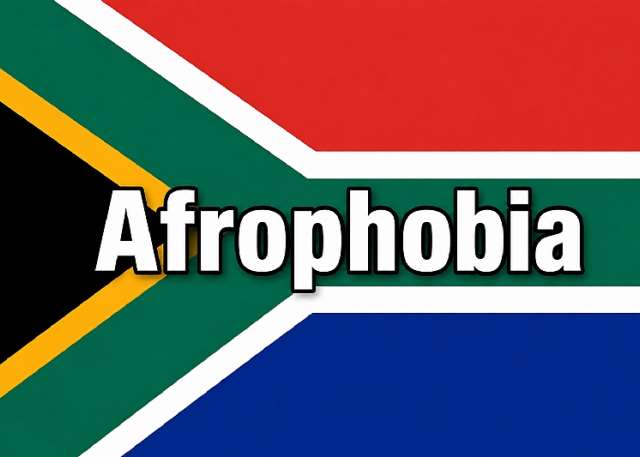
A left-wing view does not say xenophobia in South Africa is “naturally” Africanist or that “black” people are inherently united. It says xenophobia is a product of racial capitalism, township political economy, state rhetoric, and social fragmentation — and its racialised pattern of targets reflects material conditions, not essential identities. The term “Afrophobia” is analytically useful in some ways, but insufficient and sometimes misleading. It is not a perfect analogy and risks implying that “black’’ Africans are a single category, that the violence is continental rather than structural, and that South Africans are rejecting “Africanness” rather than responding to material pressures. This is why many scholars prefer “racialised xenophobia” or “xenophobic nationalism.”
The pattern of targets is real — but not universal. Some “black” African groups are targeted (Zimbabweans, Mozambicans, Malawians, Congolese, Somalis, Ethiopians, Nigerians) but other ‘’black’’ African groups are not targeted (Basotho, Batswana, Swazis — despite being equally “African.”). Non-African groups are sometimes targeted (such as Bangladeshis, Pakistanis, Indians, Middle Eastern traders). This shows the violence is not simply Afrophobia. It is situational, economic, and shaped by local narratives.
A left-wing structural view focuses on township political economy. Townships are sites of unemployment, informal trade, competition for customers and weak state presence. Migrants who run spaza shops or informal businesses become visible competitors. This explains why Somalis, Ethiopians, Pakistanis, Bangladeshis, and Nigerians — all active in township retail — are often targeted. It is economic positionality, not continental identity. Another issue is State rhetoric. The South African state uses terms like “illegal foreigners,” “undocumented migrants,” and “border jumpers.” This legitimises vigilante violence. But the rhetoric is not continent specific — it is about criminalisation, which then gets mapped onto whichever groups are most visible in informal economies.
Colonial and apartheid racial hierarchies also play a role. Post-apartheid xenophobia often reproduces these hierarchies: “White” foreigners are rarely attacked (seen as wealthy, non-competitors). Chinese and Middle Eastern traders are sometimes attacked (seen as competitors). “Black” African migrants are frequently attacked (seen as direct competitors and socially proximate). This is racialised class conflict, not “Afrophobia.” There is also the proximity and visibility situation. Basotho, Batswana, and Swazis are less targeted because they are culturally proximate, they blend more easily into South African communities, are less concentrated in township retail, and are less racialised as “outsiders.” This is social geography, not continental identity.
Some left-wing analysts fall into romantic Africanism or continental essentialism: assuming “black” unity, Pan African solidarity, xenophobia as a betrayal of “African brotherhood,” and that the solution is “self love” or “unity.” This is politically weak. It ignores class conflict, competition in informal economies, state failure, unemployment and racial capitalism. It also risks moralising the issue (“black’’ people should love each other) instead of analysing the material conditions that produce violence.
Xenophobia in South Africa is racialised, class-driven, and shaped by township political economy. It disproportionately targets “black” African migrants because they occupy vulnerable economic positions, not because South Africans reject “Africanness.” It also targets South Asian, Middle Eastern, and other groups when they occupy similar positions. The term “Afrophobia” captures part of the pattern but obscures the structural drivers. It is crucial to centre material conditions, not identity. A left-wing view of xenophobia in South Africa should say: It is racialised, but not simply Afrophobia. It is class driven, rooted in township economies. It is structural, not cultural. It targets groups based on economic visibility, not continental identity.
Racialised xenophobia in South Africa and fascism share overlapping features — scapegoating, violence, nationalism, and the construction of internal enemies — but they are not the same phenomenon. Xenophobic violence in South Africa emerges from racial capitalism, township political economy, state abandonment, and informal sector competition, whereas fascism is a coherent ideological project driven by the State, organised movements, and a vision of national rebirth through authoritarianism and purification.
March and March has far right tendencies but is not yet a fully consolidated far right movement. It is proto far right: a reactionary, exclusionary, nationalist formation that mimics global far right aesthetics and tactics, but
lacks the ideological coherence, organisational discipline, and the state power project that define true far right or neofascist movements. This is classic right wing populism: a movement that weaponises social grievances into anti foreigner politics. Populism is thin ideology. Far right politics is thick ideology. This is why March and March is proto far right.
From Socialist Voice Newsletter of the Marxist Group of Namibia. No 3, August 2026