On the Question of Palestine, and South African Local Government Elections
For weeks now, I have not been able to shake the question Adam Habib put on the table in August, when he took to X to endorse Helen Zille as mayor of Johannesburg. His argument, put plainly, is that the city is collapsing, that Zille has a record of turning a city around, and that her position on Gaza is irrelevant because she is running for mayor, not for minister of international relations. He has since conceded that she holds what he called a “horrible hypocritical position on Gaza”, and last week he went further, writing that he would rather have an honest mayor who will not pronounce on genocide than a corrupt one.
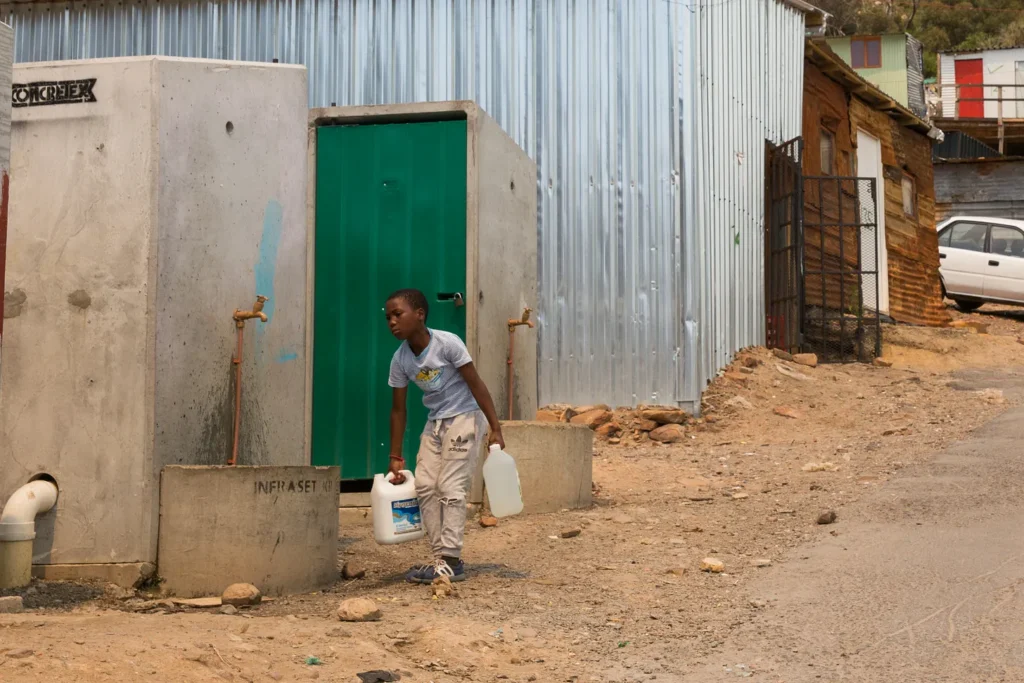
I want to take Habib seriously, because the argument is not as stupid as it appears, and because a great many South Africans, people who are tired of dry taps and dark streets and of a city that has gone through seven mayors in five years, quietly agree with him. What does a mayor have to do with Palestine? Why should a resident of Alexandra, filling buckets at a communal tap, care what Zille thinks about Gaza? Is it not a luxury, a middle-class indulgence, to ask municipal candidates to have a foreign policy at all?
These are fair questions, and I will try to answer them. In short, Habib has the order wrong. He treats competence as the ground and ethics as the extra, the thing we would like if we could have it, and I want to argue that ethics is the ground and competence is what we build on top of it, and that a politics which reverses that order tends to end up with neither.
Ethics is the point from which you begin
I want to turn to a distinction I find useful here, one I take from Slavoj Žižek, who has spent much of his career on the difference between ethics and morality. The way I read him, morality is the register of the good deed done so that it can be seen, the gesture that lets us feel better about ourselves and perform goodness for others, which is close to what he says about charity in First as Tragedy, Then as Farce, where giving becomes a way of buying off our complicity in the system that made the giving necessary. Ethics is something else. Ethics is the point from which you begin, the commitment you do not give up on even when giving it up would be convenient, and it comes before the calculation; it is not one more input into it.
This cuts both ways: There are parties in this election that perform Palestine, that wear the keffiyeh at the rally and change the subject when the sewage runs into the street. South Africa took Israel to the International Court of Justice, but critics have asked, fairly, whether the case has also become a way for the ANC to avoid talking about the state of the municipalities it runs. That is morality in Žižek’s sense, a good position held up so that it can be seen. I have no interest in voting for it.
But Habib’s mayor is the mirror image of that politician. Habib’s mayor is asked to be competent, and nothing more, and the question of what she stands on is set aside as a matter for another office. Is competence ever neutral, though? Competent at what, and for whom? Who decides which neighbourhoods get the pipes first, and on what principle?
Piped water
Zille herself has already answered some of this. In March 2017 she tweeted that anyone who thought the legacy of colonialism was only negative should think of the independent judiciary, the transport infrastructure and “piped water etc.” She apologised, and her party opened a disciplinary process, and I am not raising it to win a point about a tweet that is nearly ten years old. I want to stay with it for a while, because I think it is the most honest thing Zille has said about how she understands government and history, and because those two words near the end of it, piped water, are the whole of Habib’s case for her.
First, she gets the history wrong. Colonial water law in this country ran on riparian rights, which meant the water belonged to whoever owned the land along the river, and the 1913 Natives Land Act made sure that was almost never a black person. The 1956 Water Act spoke of equitable distribution and served white farms, mines and industry. By 1976, 93% of households in Soweto had no running water. When the democratic government took office in 1994, it inherited roughly 14 million peoplewithout a safe water supply and about 21 million without basic sanitation. Piped water was never colonialism’s gift to this country. The pipes were laid for some, and the absence of pipes was laid for the rest; that absence was a policy, a way of governing black labour by controlling access to water.
Second, and this matters more for Johannesburg, she gets the logic wrong. The tweet looks at a pipe and counts it as a good in itself, as if infrastructure could be weighed apart from the question of whom it was built to serve and whom it was built to leave out. That is the same move Habib makes. What kind of mind looks at a pipe and does not ask where it goes? Who drank from it, and who walked past it to the river? And if you cannot see that question in the history, why would you see it in the city you are asking to govern?
The record suggests she does not, or not in time. In 2009, the DA-run City of Cape Town installed 1,316 toilets in Makhaza and the surrounding Silvertown project in Khayelitsha on the condition that residents build their own enclosures. Some families who could not afford to were left with open toilets. The city defended its position by saying residents had agreed to this. In 2011, the Western Cape High Court found the agreement unlawful, called the residents’ conditions shocking, and ordered the city to enclose every toilet. The case was brought against the premier of the Western Cape, then Zille, and the city she had led until a few months before the toilets went in. In 2012, she called pupils who had moved from the Eastern Cape to Western Cape schools “education refugees” and defended the phrase for weeks before apologising. From 2009, the city began fitting water management devices in poor areas like Samora Machel. These devices cap free basic water at a fixed daily amount and cut it off when it runs out. When they rolled them out more widely during the Day Zero crisis in 2018, while Zille was premier, community groups complained that households on the Cape Flats were left without water, sometimes for weeks.
I do not read any of this as proof that Zille cannot fix a pipe. I read it as evidence of where she begins. A toilet counts as delivered whether or not it has walls. A child from the Eastern Cape counts as a refugee in her own country. A household on the Cape Flats counts as a consumption problem to be managed with a device. In each case the competence is real, the toilets were built, the schools were built, the dams did not run dry, and in each case the question of dignity arrived late, if at all, and usually through a court or a protest. That is what I expect Johannesburg would get: a mayor who will lay pipes very efficiently and then have to be told, by a judge, where she should have laid them first. Ethics is the point from which you begin, and where you begin decides where the water goes.
What a city buys
Returning to the question of what a mayor has to do with Palestine because the case for keeping Gaza out of local elections depends on the idea that a city has no foreign policy. It does. A city decides who it buys from, who it invites, whose money it courts and on what terms. Whoever governs Johannesburg or Cape Town after Wednesday will spend the next five years chasing investment, foreign and local, to pay for the very pipes Habib worries about, and each of those decisions raises an ethical question before it becomes managerial. Does this money, this contract, this partnership, help to finance genocide and settler-colonial occupation? Would we know if it did? Would the mayor care to find out?
This is not hypothetical. Last month, the DA’s mayoral candidate in Durban, Hossain Haniff, said at a debate that he would be open to inviting Benjamin Netanyahu, a man wanted by the International Criminal Court, if the visit would benefit the city. That is the logic of competence without ethics, stated as clearly as it can be: the city as a balance sheet, and anyone welcome at the table if the numbers work. And it is the same party whose senior leaders, according to this month’s reporting, have described Navi Pillay‘s work on genocide as divisive, in the same week that she was awarded the Nobel Peace Prize.
Nor is it impossible to do otherwise. Councils elsewhere have embedded ethics in their procurement; Leicester in the United Kingdom resolved to boycott goods from illegal Israeli settlements in its purchasing, and when an activist group took three English councils to the High Court over similar resolutions, the claims were dismissed. Our procurement law sets limits, and any council that tries this will need good lawyers, but the point stands: a municipality has choices, and the person in the mayor’s office decides whether those choices even make it to the table.
The myth of Cape Town
The city Habib holds up as proof is Cape Town – my city. I vote here, and I know its reputation for competence is partly earned. But a 2023 study by the Human Sciences Research Council found that almost 40% of residents in the poorest neighbourhoods fetch water from communal taps outside their homes. This year, the city proposed a wall along nine kilometres of the N2 as a safety measure and sent heavily equipped tactical units and military-style vehicles into the Cape Flats. A Palestine Solidarity Campaign spokesperson described this as importing Israeli logic into the management of a city still shaped by spatial apartheid. I do not think that comparison is overblown. Competent for whom? Competence that works beautifully for the City Bowl, yet builds walls along the N2, is a politics, and it has a starting point, whether anyone admits it or not.
Let’s linger a little longer with the myth of Cape Town, because Habib’s entire case rests on comparisons, pitting Cape Town against Johannesburg and Durban, and the Western Cape against the Eastern Cape, and he has defended this as a matter of “comparisons of like for like”. It is nothing of the sort. Under apartheid, large parts of this country never had local government at all. The bantustans were built as labour reserves and were starved of roads, pipes and power by design, while the cities that were run for white residents inherited the tax base, the reservoirs and the engineers. Roughly 18 million people still live in territory that was once a bantustan, and municipalities there consistently perform worse on service delivery than those outside them. The Western Cape has no former homelands. The Eastern Cape, where so many Capetonians have family, carries an infrastructure backlog estimated at more than R150 billion and over 36,000 kilometres of unpaved road. To compare the two and call the difference competence is to read the map apartheid drew and give the credit to whoever was handed the good half of it. Even analysts who give the province credit concede that the Western Cape was dealt a better hand, and argue only that it has played it well.
And who was holding that hand? This matters, and precision is important. In 1994, the Western Cape was the only province the National Party won, and its first premier, Hernus Kriel, had served as apartheid’s Minister of Law and Order. In 2000, Tony Leon’s Democratic Party joined with the New National Party to form the Democratic Alliance, and the new party won the newly unified City of Cape Town that December, with Peter Marais as its first mayor. That marriage did not last. The NNP walked out in 2001, and the ANC held the city from 2002 to 2006 and the province from 2004 to 2009. I do not want to pretend those years undid much either. But since Zille took the mayoralty by 106 votes to 103 in 2006, and the province in 2009, the party Leon built has governed Cape Town without interruption. For twenty years, it has stewarded a city whose pipes, roads and suburbs were laid out by the Group Areas Act.
What has it done with that inheritance? It has maintained it, and I mean that in both senses. The infrastructure that served Constantia and Sea Point has kept working, and the city that kept Khayelitsha and Manenberg at the end of a long train ride has kept them there. In July this year, the Constitutional Court unanimously found that the City of Cape Town and the Western Cape government had failed in their constitutional obligation to redress spatial injustice after the province sold the Tafelberg school site in Sea Point in 2015 without properly considering it for affordable housing. Justice Mhlantla framed the case as a question about “the enduring legacy of spatial apartheid”, and the court gave the province three months to come back with a plan. This is a governing party that is very good at running the city apartheid built, and that has had to be ordered by the highest court in the land to begin running a different one. Competent at what, and for whom? Competence is not where we begin, and in Cape Town it has too often been the name we give to keeping things as they were.
The kingmaker
This brings me to the parties that talk loudest about Palestine, and here I want to be just as plain. The EFF will not get my vote, and my reason is structural; it has nothing to do with any single scandal. In the thirteen years since its founding, the EFF has never governed a city, and the pattern of its local record is that of a kingmaker, a party that trades its votes in hung councils for influence over money. In 2018, while the EFF propped up Herman Mashaba’s DA-led administration in Johannesburg, amaBhungane reported that a fleet company paid what looked like kickbacks to a company linked to Julius Malema shortly before it won a contract worth more than R1 billion from the city. National Treasury later declared the contract irregular and ordered a forensic investigation. The EFF denied influencing the tender, as it has denied benefiting from the VBS Mutual Bank looting that investigators traced to entities linked to its leaders.
What is the use of a correct position on Palestine held by a party whose relationship to the city is extraction? I do not think there is much. It is morality again, in Žižek’s sense, the right slogan worn in public while the ethics, the point you begin from, is somewhere else entirely. And the people who pay for that gap are the same people Habib says he is worried about, the residents waiting on a fleet of municipal vehicles that, by 2019, the company that won the tender was struggling to deliver.
Derivative of the other
I want to turn now to the parties that worry me most, and they are not the ones usually called right-wing. I would not describe the Patriotic Alliance, the National Coloured Congress or MK as plainly right-wing, and I think doing so lets them off too lightly. What they facilitate is an ethnic politics, either pro-coloured or anti-black, and in places both at once, a politics derivative of the Other and built against an Other. That is what makes them dangerous.
The word I keep coming back to is derivative. “Coloured” as a political constituency did not fall from the sky; it was made by the Population Registration Act, by the apartheid state’s need to sort people and rank them, and a politics that takes that category as its ground keeps the state’s racial grammar intact and turns it on a new target. Mahmood Mamdani’s Define and Rule is about exactly this, about how colonial governance made race and tribe into political identities that outlived the colonial state. Fanon saw it earlier, in “The Pitfalls of National Consciousness”, where a liberation that fails to deliver falls back into tribe and region, into the small certainties of who belongs and who does not.
The record is not subtle: The Equality Court found the NCC’s Fadiel Adams’s social media posts racially offensive, on the basis that their clear implication was that a black African leader could not address the concerns of coloured communities. Last year, Parliament suspended him for fifteen days and docked his pay for racist and vulgar language in a video aimed at a woman. He apologised.
The PA went into the 2024 election promising mass deportation of undocumented people. In Johannesburg, its deputy president, Kenny Kunene, resigned as transport MMC after he was found at the home of a man accused of murder, and was reinstated after Gayton McKenzie threatened to walk out of the government of national unity. As for MK, its MPs joined the PA and the NCC in Parliament to amplify the grievances of coloured South Africans, a party that presents itself nationally as finding it useful to speak to one ethnic constituency against another.
I want to be careful here, because the grievance is real. People on the Cape Flats have been neglected by every administration since 1994, the DA’s included, and anyone who has spent time in Mitchells Plain or Manenberg knows the gangs, the drugs and the sense of being nobody’s priority. Even Daily Maverick’s analysis grants that these parties draw on racial grievances that are, to some degree, legitimate. The danger lies in the answer they offer, which accepts the apartheid category as the truth of who people are and then needs a black other, or a foreign other, to make that category hold. A politics that begins there has already chosen where the water will not go.
In the queue
So where does that leave me, standing in the queue tomorrow morning with two ballots in my hand? Nowhere comfortable. Rise Mzansi’s Irfaan Mangera put it well when he said Habib had built a false choice between administrative competence and moral conviction, as if the two could not live in the same person. I agree with him, though I would put it in Habib’s own terms. Habib is right that we are not choosing between saints and sinners. Where I part ways with him is on what we are allowed to ask for. Must we really accept a mayor who can fix a pipe but will not name a genocide? Must we accept a party that names the genocide and loots the fleet tender? Who taught us that these were the only two options on the ballot, and why have so many of us stopped asking for more?
I want politicians who are ethically and managerially competent, in that order, and I don’t think that is a utopian demand; I think it is the minimum. Competence is not where we begin. It is what an ethic has to earn, in water, power, and roads, over five long years, and an ethic that cannot earn it deserves to lose. But a competence that has no starting point, that will do business with anyone and wall off anyone, is not neutral; it has simply hidden where it begins.
I do not yet know whether any party on my ballot clears that bar. But I would rather go into the booth with the question still open than, as Habib asks us to, pretend that the question does not belong there at all.
–
Ali Ridha Khan