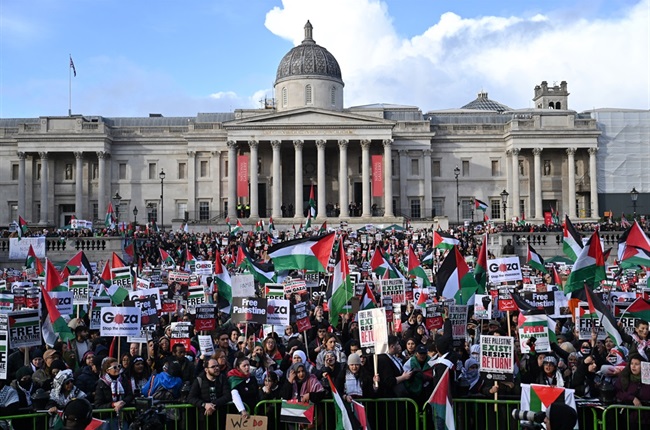
On the 18th August 2026 comrades from the Palestine Solidarity Alliance (PSA) informed on the BDS Coalition Whatsapp group that the PSA will be hosting George Galloway and Yvonne Ridley on the 16th September in Johannesburg and whether they could add the SA BDS COALITION logo onto their advertising campaign. In response the Coalition’s Executive Committee (EXCO) decided unilaterally against it, citing that George Galloway is homophobic and endorsing a rally with him as the main speaker would go against the Coalition’s principles. This opened up a storm on the question of democracy within the SA BDS Coalition as members of the Co-ordinating Committee (CC) who represent Palestine Solidarity Organisation’s (PSO’s) were not consulted. This raised the question of where the political authority for decision making lay, and what the core scope of work of the Coalition was.
At a special online meeting held on the 25th August 2026, there was a reluctance of the National Office Bearers (NOB’s) to include other members outside the representatives of PSO’s in the Central Committee, to participate in the discussion. Fortunately sense prevailed and they were allowed to participate after some delay.
The democratic question in organisations is often an indication of deeper principled political disagreements and soon these exchanges led to a discussion on the principles and policies of the coalition. The central disagreements revolved around the political underpinning of an ‘intersectional’ approach and the inclusion of LGBTQI+ rights as a central plank of our unity. These questions are critically important to the question of building the Coalition as a Mass Solidarity Movement in South Africa thereby possibly laying the foundation for a mass based anti-Imperialist movement in the country.
What was clear from all these exchanges was that there are deep divisions within the SA BDS Coalition and these relate to the different understanding and approach the various PSO’s have to the building of the Coalition. The divisions run deep and if we do not address to the satisfaction of all the PSO’s the question of democracy and the basis of unity in the Coalition, we may face the danger of a serious split/fracture, which will serve only the interests of our enemies. We must come to an understanding and agreement on a platform of common work and a programme of action in the Coalition to ensure these divisions do not fester and cause a break-up of the Coalition.
The SA BDS Coalition is a United Front
The SA BDS Coalition in terms of its Constitution which is confirmed by its Membership Agreement, is in all essentials a United Front organisation. While the constitution creates the Coalition as a Non-Governmental Organisation (NGO), the outstanding element of the Coalition is that it consists in an agreement between two or more parties and organisations, which have different programmes, for joint action on specific issues. This is a form of a United Front. Through the united front the widest possible unity is achieved when the action accepted as desirable by all of the constituent organisations is undertaken and realised.
The constitution of the SA BDS Coalition is clear that:
“The Sole or Principal Object of the Association shall be to promote BDS in line with the call from the Palestinian BNC; to promote the human rights of the Palestinian people through advocacy and strategic campaigns in South Africa; including campaigns of boycotts, divestment and sanctions against the apartheid state of Israel and its racist supporters while extending support and solidarity to the people of Palestine regardless of gender, faith, creed or political affiliation.” Furthermore, the constitution outlines that:
“In furtherance of this Sole or Principal Objective, the Association shall: –
3.1. Strive to forge a broad national coalition that coordinates all strategies for BDS solidarity work within South Africa; 3.2. Raise public awareness about the Palestinian people and their struggle for self-determination, recalling and inspired by the South African struggle against apartheid; 3.3. Mobilise public support for the Palestinian people and their struggle; 3.4. Lobby and make submissions to the South African government to further the goals and objectives of the Association; 3.6. Campaign and advocate for the economic, political and cultural isolation of Israel, as an apartheid, colonial state, in support of the International BDS campaign as called for by the Palestinians; 3.7. Campaign for the end of the illegal occupation of Palestinian territory and the full implementation of international human rights and humanitarian law; 3.8. Build and cement alliances in Africa and internationally.”
The underlying method of the united front tactic is captured in the constitution. It recognises that the organisations joining the SA BDS Coalition are not homogenous entities, that they represent different political entities that are active in the mass movement at the same time, that the aim is to jointly fight to promote the human rights of Palestinian people and implement the strategy of boycott, divestment and sanctions against the apartheid state of Israel and provide support and solidarity to the people of Palestine irrespective of gender, faith, creed or political affiliation. The constitution also recognises that the aim is to unite the broader forces in a practical fight “to forge a broad national coalition that coordinates all strategies for BDS solidarity work within South Africa”, raise public awareness, mobilise public support, lobby and make submissions to the SA government to further the aims and objectives of the organisation, campaign and advocate for the economic, political and cultural isolation of Israel and campaign for the illegal occupation of Palestinian territory and fight to cement alliances in Africa and internationally.
The Basis of Unity in the SA BDS Coalition
The constitution and membership agreement of the SA BDS Coalition is clear on what the basis for unity is:
- Solidarity with the Palestinian struggle and the fight against settler colonialism, occupation and apartheid. Fight for the national emancipation of the Palestinian people from the river to the sea!
- Build a coalition that strives to implement BDS as a central pillar of our struggle, campaigning for the economic, political and cultural isolation of the state of Israel.
- Campaign for the end of illegal occupation and the implementation of international human rights and humanitarian law.
- Internationalism and anti-Imperialism.
We searched hard but could not find any direct reference to ‘intersectionality’ nor to placing front and central of our programme of action the question of LGBTQI+ rights in the SA BDS Constitution or in the Membership Agreement. The website of the Coalition however deviates from the constitution through its intersectional approach, complete with an accompanying graphic. This anomaly should be clearly explained by those who set up the website. It seems to be a deliberate and sectarian interpretation of the constitution!
Potch for Palestine is not an independent PSO but a sub-group of a broader working class collective, the Solidarity Action Committee Collective (SACC); it is the internationalist and anti-imperialist action sub-committee of the SACC. The SACC is a socialist organisation inspired by Marxism. It distinguishes between exploitation (the economic extraction of surplus labour) and oppression which is historically shaped by and instrumental to the division of labour under capitalist class rule. It contends that the root of all social inequalities, including racism and sexism, lie in the foundational economic structure of capitalism and the competitive accumulation of capital through wage labour exploitation. While we are fully aware that individuals or groups can experience multiple forms of overlapping oppressions simultaneously, we argue though that no one form of oppression can be understood or overcome in isolation, and the struggle against oppression and exploitation must draw in and include all layers of the oppressed. As Marxists, we argue that ‘intersectionality’ cannot adequately explain the origins of the varying forms of oppression, and therefore cannot provide the solutions. Intersectionality emphasizes subjective experience and individual thought, language and behaviour as the lens through which to understand and overcome oppression. This is a profoundly idealist approach which is based on the idea that in order to change society, you need to change people’s ideas first or even worse, that by changing ‘discourse’ you can transform reality.
The ideological foundations of intersectionality rests on post-Marxist theories such as postmodernism and poststructuralism, theories that gained popularity in academic circles precisely in the period of capitalist reaction and the collapse of Stalinism in the late 1980’s. Having lost faith in the struggle for socialism, the working class’s ability to lead the revolution, transform the economic and social foundations of society, the academic left retreated to place emphasis on changing how individuals think, rather than putting their faith in class struggle, especially the working class capacity after it had become denatured and demobilised by the simultaneous impact of neoliberal restructuring of economies and workplaces and their reactionary trade union leadership and traditional political parties, such as the British Labour Party. It is bourgeois liberalism couched in radical verbiage!
The SACC’s focus of work is to build action committees and co-ordinating structures to unite the working class in struggle to address the organic needs of the working class through the struggle against hunger, poverty, landlessness, unemployment, woman and child oppression, service delivery, education and healthcare issues etc. We address all forms of oppression wherever it arises and we support the rights of all oppressed people, including LGBTQI+ rights. However, at the centre of our work lies the issues that arise from the actual conditions and struggle of the working class in our locality, nationally and internationally.
The working class under capitalism, a class-in-itself, is nothing more than raw material for exploitation. The dominant ideology in a class society is that of the ruling class. The ideology of the people who carry out revolutions, the exploited and oppressed masses, is imbued with all the reactionary ideas and prejudices imposed by the ruling class. It is in the course of the struggle to transform society that people (in large numbers) become transformed and change (to a large extent) their points of view. The organisation of the working class and their allies must start with an appreciation of their own condition and consciousness and through a process of struggle and education arrive at a socialist consciousness. The matter of raising consciousness through struggle is a complicated one; a process of successive approximation. It is only when the working class becomes a class conscious, class-for-itself, a class that has developed a revolutionary consciousness, that it can change society. Marx in The German Ideology explains this beautifully “…the alteration of men on a mass scale is necessary, an alteration which can only take place in a practical movement, a revolution; … the class overthrowing it can only in a revolution succeed in ridding itself of all the muck of ages and become fitted to found society anew.” Ideas change in and through struggle (combat, organisation, consciousness), not by ‘principles’ whose foundations lie in bourgeois ideas; not through the greyness of theory (Goethe) or any academically inspired ‘learning’ process.
We are not a debating society but an activist orientated coalition whose primary task is to build a mass based solidarity movement. We organise largely in the African working class informal settlements. Our meetings open with a Christian prayer and close with a prayer. We also organise amongst the Muslim population and we request financial support for our work from the Muslim business community. We understand that the question of religion is a very sensitive matter and in both instances, if we attacked or transgressed religious beliefs, we would lose all support for our cause. Not only is this suicidal but it makes no sense politically. Frederick Engels wisely understood and argued that even on the victory of the socialist revolution, socialists dare not ban religion. It is only with abundance and collective control of production, that man would begin to understand that they are the masters of society and bury idealism.
We cannot cut ourselves off from the class as it exists through pronouncing a priori fine sounding ‘principles’. We know that to attack religion or the omnipotence and omnipresence of God would be suicidal to our mission. There is a real complication/obstacle if we place the fight for one of our broader democratic rights, like LGBTQI+ rights, at the centre of our platform (public activity). We cannot detract from our principal objective, which is to place the question of solidarity with the Palestinian struggle as captured in our constitution at the centre of our work. The question of democratic rights is important insofar as these are rights gained through the anti-Apartheid and class struggles. They are critically important as the reactionaries and rightwing try to reverse them. We must defend them! However these are still bourgeois rights and will not free society of the scourge of capitalist oppression and exploitation. These rights will only truly be realised if we organise to overthrow the capitalist system and lay the foundation to build a socialist society. Also we must be cognisant of the fact that prejudices run very deep and we rarely find organised queer groups in the townships, or in Muslim communities. These oppressed people largely remain in the closet. Our task, if we are serious about fighting the different iterations of oppression, is to assist them in organising themselves and encourage them to join the SA BDS Coalition to put forward squarely their special programme and needs.
Moreover, as the coalition, our central objective is to support the liberation of Palestine from Zionist occupation and tyranny. The Palestinian masses and their political parties have not placed LGBTQI+ rights at the centre of their political programme. In fact, we can safely assume that the most credible and supported resistance movements and parties like Islamic Jihad and Hamas would reject LGBTQI+ people based on their religious ideology. Are we to refuse to support them, at least in the armed struggle? No. We can however, in the process of solidarity work try to convince them that the Palestinian struggle for liberation and equal human rights must mean FOR ALL Palestinians. But to reject and oppose them a priori, would be wrong and only serve the interests of our enemies.
Conclusion
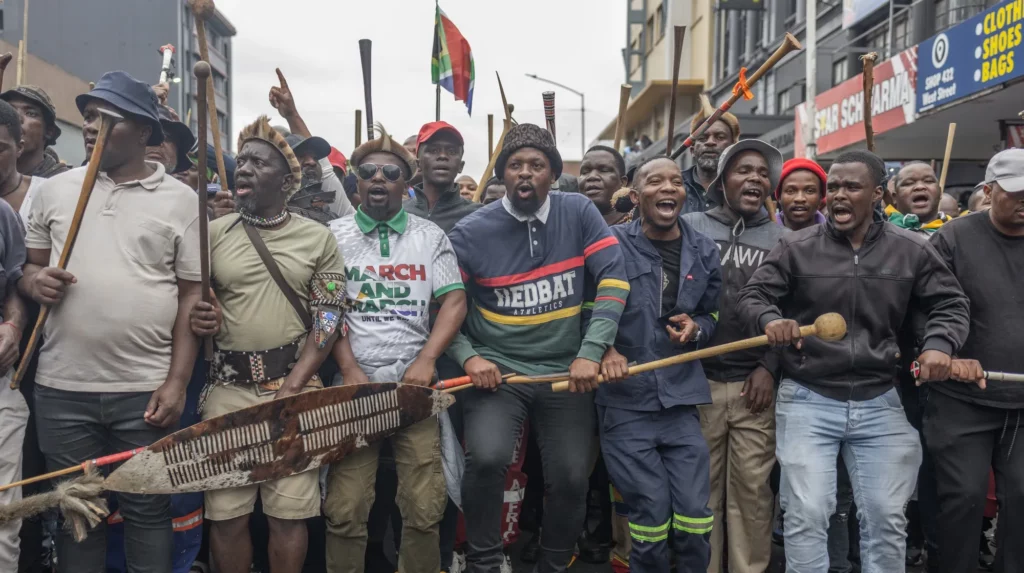
As a Palestine Solidarity Organisation (PSO) affiliated to the SA BDS Coalition, Potch For Palestine rejects both the theory of intersectionality and the position that we place the question of LGBTQI+ rights at the centre of our political platform. We also wish to make clear that we fight to ensure the deepest democratic practices in the Coalition at all times; the role of the executive is to facilitate the functioning of the Coalition and that political decisions are to be taken by the PSO’s at scheduled or special meetings convened. We want to reiterate that the SA BDS Coalition is not a political party. It does not have a homogenous ideological and political programme. It is a United Front based on the principle of diverse ideological and political formations that unite around a specific programme of Palestinian and anti-Imperialist struggle. Our slogan is ‘March Separately and Strike Together’! The failure to respect our differences and abide by the call in the constitution for the formation of a Coalition on a common platform of Palestinian solidarity, will undermine unity and lead to unnecessary division going forward.
Forward to the Coalition as a United Front organisation! March Separately, Strike Together!
Potch For Palestine 8th September 2026
Footnotes:
- The information and my understanding of the issues arise from my re-reading of the exchanges in the whatsapp group and my recollections from the online meeting. The minutes of the special meeting has to date not been distributed.
- The website cannot express views at odds with the constitutional basis of unity.
- The real life experiences of the working class are referred to as ‘class reductionism’ by university based middle class types who have no experience in the organising the working class.
- For a more detailed study of intersectionality, “Marxism vs. Intersectionality’, In Defense of Marxism website, https://Marxist.com.
- The insinuation in the zoom meeting that we may be homophobic, is childish prattle of individuals who are ignorant about organising in the working class or mass struggle.
- One of the speakers lauded the South African constitution and argued that if we do not support the SA BDS Constitution at least we should respect the capitalist constitution of the ‘New’ South Africa. They leave out the central feature of the constitution, section 25 which protects private property rights. These property rights arise from the theft of land and dispossession of the indigenous people and protect the property of the ruling class. This is a bourgeois constitution which is the legal framework for the continued existence of the neoliberal and neo-Apartheid capitalist system of super-exploitation and oppression in a new form.