Ghana was on fire in 1982. Workers seized factories, Defence Committees challenged the military government, and the International Monetary Fund (IMF) circled like a vulture, preparing its structural adjustment programs. Under Jerry Rawlings, a young officer, a military regime projected a left-populist image while tightening control. Defence Committees — loosely modelled on Cuba’s Committees for the Defence of the Revolution — spread through workplaces and neighbourhoods, energising participation but never fully independent of the state.
That year, 1982, workers at Ghana’s largest multinational manufacturing plant in the industrial city of Tema, backed by Defence Committee activists and local unions, seized the factory after a long conflict with management and a bloody battle on 17 November. For a brief moment, collective intelligence and discipline from below ran production — the state found a way to accommodate the takeover, giving it attenuated recognition, while doing everything possible to ensure this example would not spread. At the same time, the government used the threat of workers taking power to push back against international creditors, renegotiate terms with the IMF and with multinationals.
It was in the period of this storm, as a young student at the University of Ghana in 1985, that I discovered a slim pamphlet that reshaped my understanding: John Molyneux’s What Is the Real Marxist Tradition?
What struck me most was Molyneux’s assertion that ordinary working people — not politicians, generals, or intellectuals — are the true agents of historical change. When they are in the saddle they don’t wait for permission; they take matters into their own hands. This wasn’t abstract theory. In Ghana, we had just seen workers oust their bosses and run production themselves. Cooperation trumped competition; social needs, not managerial diktat, set the pace. The state panicked — what if others followed? Workers, unsure of the next move, appealed to the very government they had defied. The moment passed. The lesson did not.
What struck me then — and still does — is how Molyneux combines clarity with strategy. He reminds us that the struggle isn’t a moral appeal to the powerful. It is about class power, organisation, and agency. And unlike the many rigid versions of Marxism that treat history as a sequence of fixed stages, he draws from Antonio Gramsci’s insight: theory emerges from struggle and returns to sharpen it. Real transformation is made through learning in practice.
In that atmosphere of confusion and hope in the early 1980s, Molyneux’s pamphlet arrived as a work of startling clarity. Although written from a Trotskyist tradition unfamiliar to most of us in Ghana, it offered a method that seemed immediately relevant. It turned on two ideas that changed my understanding of politics and history
The first was its insistence on the political independence of the working class — as the decisive agent of social transformation, and working people’s all-sided struggles as the strategic forcefield, the crucible, of revolutionary politics. Even in Ghana, where industry was small and uneven, this made intuitive sense. The workers’ occupation of the country’s largest multinational manufacturing concern in 1982 symbolised that potential. However, the workers themselves, uncertain of their own power, appealed for state recognition — laying bare the contradiction between independent class self-activity to transform society and subordination within a project of “national interest”, defined by the state and the wider ruling class. Molyneux’s unshakeable belief in the creative capacity of the working class helped me begin to find coherence in that confusion.
The second idea was Molyneux’s reminder that Marxism is not merely an interpretive theory but a weapon for victory — a practical guide for organisation. Ghana then lacked any revolutionary socialist party; existing leftist groupings were mostly radical-nationalist, combining anti- Western imperialist ideas with statism. I read widely and eclectically, but it was Molyneux who showed how analysis and organisation must live as one. Later, when I moved to Britain and found a political home within a living socialist tradition, I understood what that unity meant in practice. His clarity on class, the state, and crisis remains a vital compass for understanding both the global order and our own African experience.
Why this matters more than ever
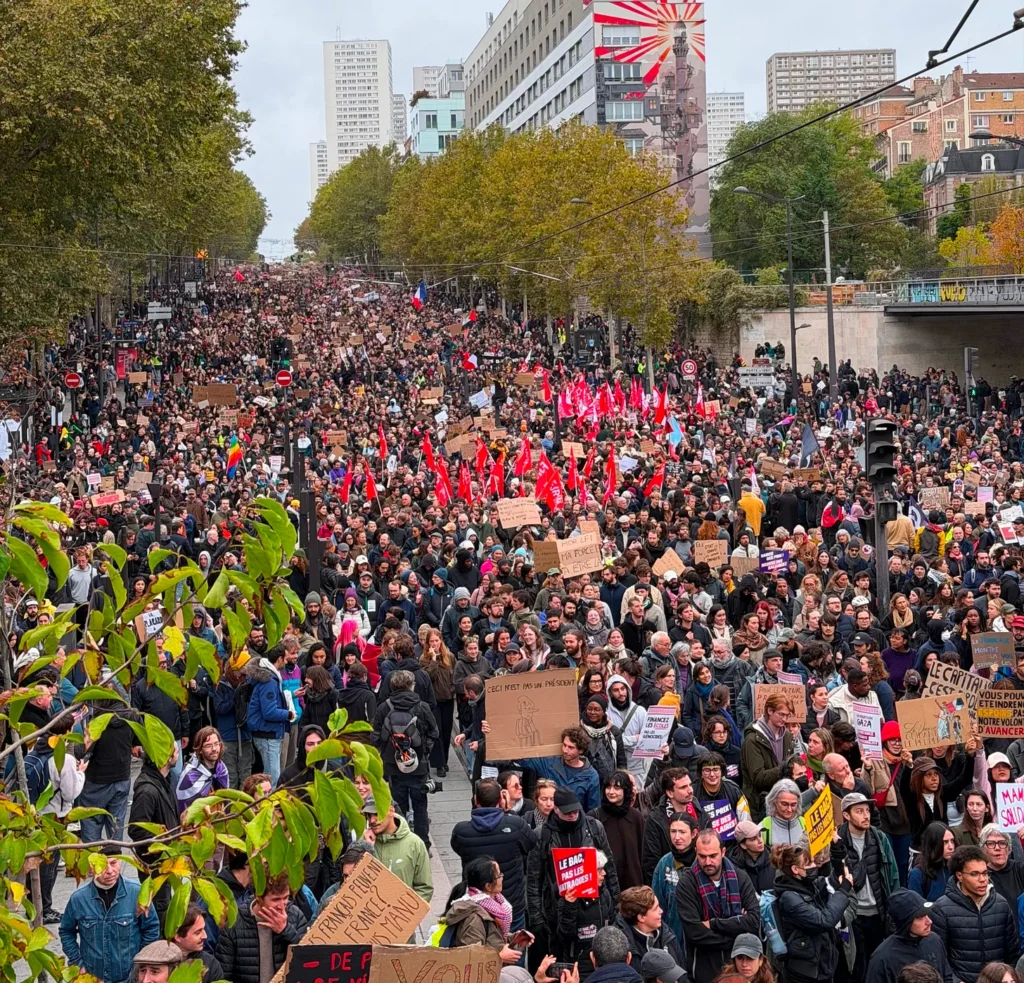
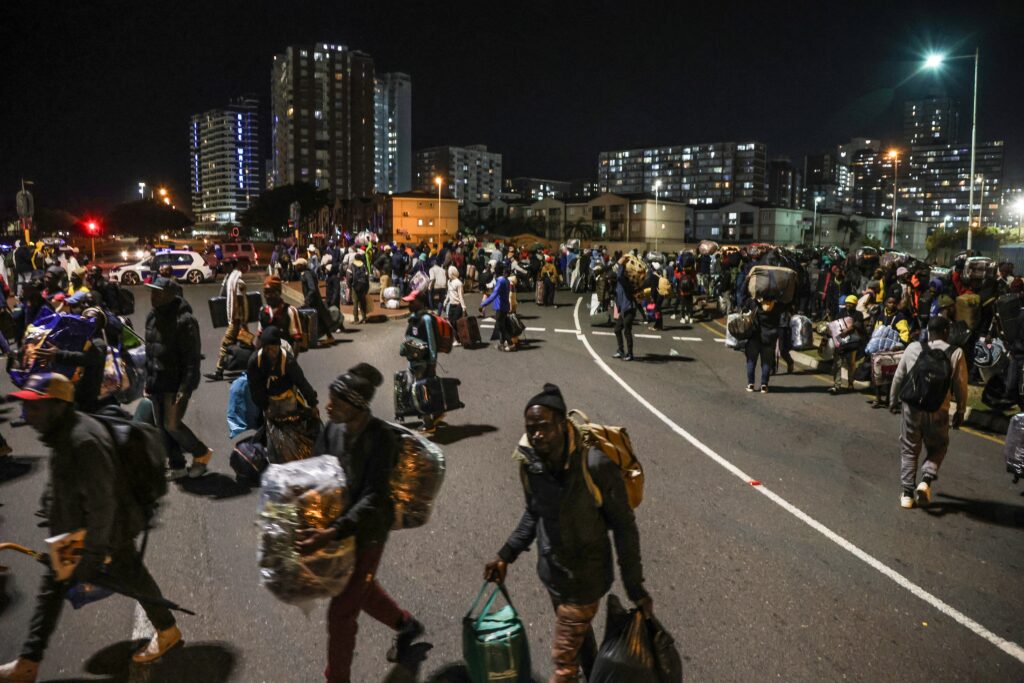
Fast-forward forty years and the lesson is even sharper. Young Kenyans flood the streets shouting #RutoMustGo. Sudan’s neighbourhood resistance committees organise despite military coups and struggle to retain civic solidarity amidst the horror of ruling class war. South African shack dwellers demand dignity. Nigeria’s #EndSARS movement shakes foundations. Madagascar’s youth rise over water and electricity. Morocco’s protests spread from city to city.
These movements are brave, creative, and full of energy — yet they keep hitting the same wall we faced in Ghana. Without working people leading and a clear socialist horizon, they’re hijacked by opportunistic politicians, crushed by state violence, or fractured by ethnic, religious, gender, sexual identities and political outlooks.
Here Molyneux’s What is the Real Marxist Tradition? is indispensable. In an age when everyone — from Silicon Valley CEOs to military coup leaders — claims to be a ‘disrupter; and a “revolutionary”, it delivers a grounded method. It identifies the force that can actually transform society — not hashtags or uniforms, but the working class itself: scattered and beaten down at times, yet still central to how everything runs. It rejects stage-theory rigidity in favour of learning by doing. And it insists on the most radical proposition of all: the working class must free itself — or we all remain shackled.
The African working class is real and growing
Let’s confront the biggest misconception: that Africa lacks a working class. Who built the railways that extracted our wealth? Who dug the mines that enriched European capitalists? Who harvested the crops that fed colonial metropoles?
And today? Who codes apps in Nairobi for pennies while Silicon Valley banks the profits? Who toils in Chinese-owned Ethiopian factories making clothes for global brands and fashion chains? Who drives Uber in Lagos, fighting both algorithms and venture capitalists? Who mines cobalt in Congo, their broken backs powering every electric car battery?
By 2050, two out of every five workers globally will be African. This is where the world’s youngest workforce and fastest-growing cities are. But this isn’t your grandfather’s working class concentrated in huge factories. Today, African workers are everywhere — formal and informal, urban and rural, local and global, traditional and digital. Same class, different forms. What Sandro Mezzadra calls the “multiplication of labour” isn’t disappearance — it’s ubiquity, if we choose to see its full, actual structural realities as producers of wealth and of surplus value within the uneven global profit system.
How they extract our wealth
Post-independence states in Africa once drove industrialisation to build domestic markets, investing in health, education, and infrastructure to stabilise a new productive workforce. Workers who helped defeat colonialism couldn’t be ignored. That social contract is gone.
In the neoliberal era, immiseration is a feature, not a bug or malfunction. Africa was largely bypassed by global manufacturing’s restructuring, and the system depends more than ever on reproducing poverty here through competition to expropriating land, exploit human labour and despoil natural resources at the lowest possible cost to extract the highest possible margins. Infrastructures that facilitate and circulate this extraction, and the finance that fuels and concentrates this wealth, are all similarly sources of arbitrage, immiserating communities and working populations in Africa.
When we work, we create more value than we are paid. The extra — our unpaid labour — is surplus value, and it powers capitalism everywhere. In parts of Asia, it’s captured through technology and productivity — squeezing relative surplus value as workers produce more in less time. In much of Africa, the squeeze is often absolute: longer hours, lower wages, privatised schools and hospitals, land grabs, ballooning debt. They make money by making us poorer. Directly and indirectly, global capital increasingly exploits these uneven conditions and forms of profit extraction to divide and exert downward pressure on the overall conditions of labour everywhere. And yet, it remains truer still, the wealth of capitalists and of the world is dependent on labour and the working classes. This was a seminal point of departure that Molyneux’s pamphlet highlighted for me, one who’s political implications remain as profound, and its lessons as important if not more, than ever.
In contrast, change centred on and led by other classes in society cannot ascend to the what Africans, and all of humanity, needs.
The limits of middle-class movements
Here’s a hard truth: movements led by middle-class consciousness, however radical they sound, consistently fail to achieve fundamental change. Take Kenya’s massive #RutoMustGo uprising in 2024. It began with anger over taxes and evolved into broader system critique, articulated and led by middle class networks. “Ruto Must Go” became “The System Must Fall”. Incredible energy, right? But without organic connections to organised workers who have the power to disrupt the wheels of capital and its system — the dock workers, flower-farm workers, matatu drivers — the movement stalled. The government played ethnic cards, opposition parties swooped in, and nothing fundamental changed.
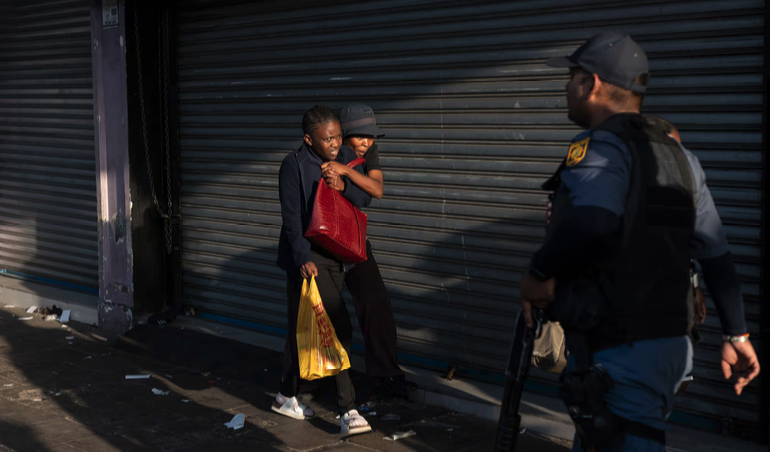
Madagascar, October 2025: students and urban youth rose over electricity and water. Utility workers joined against privatisation — an important turn. The state then mobilised the urban poor against the protests, casting students as privileged. Some youth leaders echoed the divide. As calls for a general strike grew, a military faction ousted the president promising “more democracy”. Much of the movement fell in line. Co-optation in; transformation out.
The pattern is global. Jair Bolsonaro rode into power on Brazil’s disaffected middle class. Trump channelled abandoned workers’ rage. When middle-class radicalism lacks the working class, it is vulnerable to forces pushing in nationalist, xenophobic, or worse, directions.
Democracy, the state, and development as class projects
The state, democracy, and development are not neutral public goods. They are class projects — built, captured, and remade through power. The state consolidates class rule; democracy is a terrain of class formation; development is organised around whose labour and land are appropriated and who commands the surplus.
The question is never simply whether democracy exists, but which class shapes and controls it. When the working class is weak, elites capture these arenas to stabilise their rule. When the working class organises, it starts to develop new organs of democracy that possess the potential to develop into a new type of state, directly confronting and challenging the old capitalist state.
Across Africa, the state is present — not as a vehicle of emancipation, but as an authoritarian manager of crisis using neoliberal tools. The radical military juntas of the Sahel region invoke Thomas Sankara — the radical military leader of a revolution from above in Burkina Faso in the 1980s — while signing extractivist deals. Only the oligarchs’ passports change. Chinese capital builds roads and rails, but the logic mirrors the West: maximum profit, minimum wages, resource extraction. Better infrastructure doesn’t make it socialist.
This is not a dismissal of anti-imperialism, it’s a reminder: without working-class leadership, “anti-imperialism” just swaps flags over the same mine. Even Sankara, for all his brilliance, sometimes treated wage struggles as unpatriotic, dismissing Burkina Faso’s workers as privileged elites.
The idea of the working class as a universal class — able to liberate everyone — has failed to make a decisive appearance. We cannot repeat that error today.
New sites of struggle
New battle lines are being drawn extended well beyond the boundaries of the formal working class. Africa’s low tech, small-scale gold boom employs millions in precarious wage conditions. They coexist and compete with and alongside Transnational behemoths with investments of tens od billions in the ‘formal’ industrial mining sector, backed by their global value chains and networks. In countries like Ghana and Congo, mining fuels environmental destruction, land conflicts, and fabulous profits for a few — while inflating GDP statistics, to fanfares of ‘Africa Rising’ policy narratives and media headlines.
On the other hand, think of the latent, untold structural power amongst formal and precarious informal miners together, what it could bring as a unifying spine, a magnet for unity across communities of disposed pastoralists and peasants, fighting together from below, and on the basis of full social equality across ethnicity, gender, sexuality; the pervasiveness of precarity and gig work adding new rhythms and infrastructures of struggle, all pulling together and taking on the profiteers, the polluters, their state and their system! The anti-capitalism that is lies at the heart of the objective interests of labour exploited by capital is the necessary glue that can lastingly bind and decisively alter the balance of power.
Thus, precarious workers are an important part of the African working class who are invovled in new sites of struggle. And it is still the structural capabilities of workers in core, indispensable sectors who remain imbued with the power to draw to all other workers, constituting the backbone for such precarious and the small peasants and pastoralists producers (who form a vital and large part of the Global South producer populations) whose communities and families increasingly, incessantly participate in the ranks of what one sociologist called ‘wage hunters and gatherers’, part of the broader milieu of that ever expanding forcefield of labour exploitation by capital.
Meanwhile, the climate crisis raises the stakes. Africa emits about three percent of global greenhouse gases yet carries disproportionate damage. Mainstream climate politics offers a false binary: “green growth” (more mining) or romantic primitivism (mass poverty). The real Marxist tradition points to a third path: eco-socialism built on working-class power — energy democracy, just transitions, production for need not profit, and internationalist alliances from the Niger Delta to the German auto belt.
Recovering our revolutionary history
Our fighting tradition exists in Africa — buried, but alive. The 1947 general strike that paralysed French West Africa. Mombasa dockers in the same year helped ignite independence. Durban strikes in 1973 that helped break apartheid. Excavating this history is a vital task — not as museum pieces, but as ammunition for today. Ernst Bloch called it “the still undischarged future of the past”. Every defeated strike and crushed uprising carries lessons we can activate. Tradition, in Molyneux’s hands, isn’t embalmed memory; it’s living guidance for present action.
Yet Africa’s revolutionary left is small. Trade unions are often bureaucratised; NGOs turn revolt into grant streams; parties offer ethnic arithmetic or neoliberal management. But that’s not the end of the story. Seeds of renewal exist: socialist formations in Kenya; rank-and-file caucuses in South African mines; student worker alliances in Senegal, an alliance that reached an historic level in Soweto Fifty years ago; continental networks stitching struggles together. They are not yet mass forces but no revolution starts as one.
For the working class to lead, we must move beyond defence to construction. Transformation means confronting — and reorganising — the political, economic, and social relations that reproduce exploitation. It means building organising capacities and self-governing structures rooted in workplaces and communities. It means reimagining democracy and development as working-class projects, not elite negotiations. Power grows not only from resistance, but from our ability to establish institutions of collective governance.
Reclaiming the real tradition
We are witnessing a global resurgence of the state — but not in emancipatory form. Authoritarian state capitalism, often cloaked in nationalist rhetoric, has returned using the same neoliberal tools. The overlapping crises of finance, war, pandemic, and climate have re-legitimised the state as manager of disorder, xenophobia and racism, rather than instrument of liberation.
Here Molyneux’s focus on the emancipatory class becomes indispensable. Organised labour and civil society across Africa remain dominated by bureaucracies clinging to outdated social-partnership models. Meanwhile rank-and-file disaffection grows. Many young activists view unions as obstacles; this perception, though understandable, risks abandoning the one organised force capable of uniting fragmented struggles into a systemic alternative.
Moreover, new arenas of class struggle have emerged which can extensively expand and interconnect the frontline for rank and file, insurgent, democracy from below politics of class struggle and solidarity across economies and societies: small-scale mining, logistics, platform labour, and the fight over climate transition. Across Africa, artisanal mining alone employs tens of millions, generating immense profit for elites while destroying communities and environments. Rebuilding independent class politics must also start here — on the ground of extractivism and ecological crisis.
Unfortunately, too much of the African left still sees the working class merely as an instrument of national development or sovereignty rather than as a self-conscious subject. In that vacuum politics reverts to the state, often in degraded, militarised form. Some nostalgic currents look back to failed projects of “African socialism”; others invest misplaced faith in the so-called anti-imperialist military dictatorships of the Sahel. The real task is to reclaim and renew a Marxist tradition grounded in African realities, capable of uniting struggles for democracy, equality, and survival itself – taking its place as part of, and contributing to, internationalist anti-imperialism, anti-capitalism, ecosocialism and workers’ democratic power.
A new edition
Those of us who found John Molyneux’s pamphlet amid the turmoil of the 1980s know its message is unfinished business. It taught us that theory and practice are inseparable, and that socialism is not a distant horizon but a living possibility inside every collective act that breaks with the logic of profit. Today — again — we face crisis: deepening inequality, climate breakdown, militarised politics. Yet the raw material of renewal is everywhere – a new generation inherits not just defeats, but unrealised possibilities,
To realise them, we must translate memory into organisation and hope into action. We must trust working people’s capacity to govern, not just protest. For us across Africa, the task is to make this tradition our own: to think from our conditions, organise from below, and rebuild confidence in our collective power.
The real Marxist tradition must be re-forged in African realities, through African struggles, by African working-class militants. Its renewal here will help renew Marxism everywhere. As Marx wrote, “The emancipation of the working class is the act of the working class itself”. This tradition lives not in dusty texts but in the living struggle of Marikana’s miners who died fighting, to Sudanese teachers sustaining revolution, to young Kenyans discovering class politics. That is why this pamphlet matters. Not as a holy gospel, but as a guide. Not as foreign theory, but as a tool for understanding, and changing our reality.
The future hasn’t been written. We’re the ones who will write it.
Gyekye Tanoh, Accra, 2026
John Molyneux’s booklet is available for free download from:https://ivavalleybooks.com/2024/05/02/what-is-the-real-marxist-tradition-john-molyneux-1983/