It is important to be led by people who have at least picked up a pamphlet before a microphone. You’re choosing the easy way out Jacinta, because you’re simplistic in thought but radical in action. How do you blame me and EFF for crimes committed by foreigners when we aren’t government? What do you blame Ramaphosa for if your finger points at me for border control when Leon Schreiber of the DA is the sitting minister of home affairs? I’ll give you the lecture you so desperately need. Here goes.
You accuse me of defending foreigners. I defend human beings. I defend the truth. And the truth is that migration did not create poverty in South Africa. Migration did not create unemployment. Migration did not create inequality. Migration did not create collapsing municipalities, failing schools, load-shedding, corruption, landlessness, or the concentration of wealth in the hands of a tiny elite.
Capitalism did.
Imperialism did.
For centuries, colonialism and apartheid built an economy that depended on the movement of Black labour across artificial borders. The mines of Johannesburg were built with workers from Mozambique (where your name is common btw), Lesotho, Malawi, Zimbabwe, Botswana and across Southern Africa. Migrant labour is not an accident; it is a feature of the capitalist system that enriches mine owners, corporations and multinational capital while keeping African workers divided and competing for survival.
Today, when a Zimbabwean, Malawian, Congolese or Ethiopian comes to South Africa seeking work, they are not the architects of our suffering. They are often victims of the very same economic forces that affect South Africans. The same corporations that suppress wages and exploit South African workers exploit migrant workers too. The same neoliberal policies that leave our youth unemployed have impoverished millions across the continent.
History teaches us that Afrophobia has never solved a single socioeconomic problem.
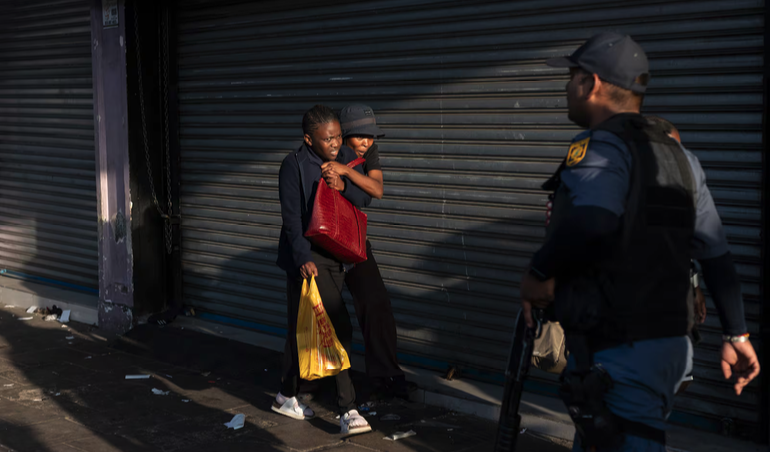
In May 2008, South Africa witnessed one of the worst outbreaks of xenophobic violence in democratic history. More than 60 people were killed and tens of thousands displaced. Foreign-owned homes and businesses were looted and burned. Yet unemployment remained. Poverty remained. Inequality remained. And might I add, the conditions have worsened over the years despite the killings of fellow Africans.
In 2015, violence erupted again in Durban and later spread to Johannesburg. Several people lost their lives and thousands were displaced. South Africans were no richer afterwards.
In 2019, attacks against African migrants broke out in Gauteng and other provinces. Businesses were destroyed, people were assaulted and communities traumatised. Yet the structural problems facing South Africans remained exactly where they were.
Long before these major outbreaks, migrants and refugees had faced repeated attacks in townships and informal settlements throughout the early 2000s. The targets changed. The suffering remained. The outcomes never did.
What these episodes did achieve was the death of Black Africans at the hands of other Black Africans.
So when you say every crime committed by a foreigner should be blamed on me, I reject that logic entirely. Criminal responsibility belongs to criminals. This we have consistently maintained even when it comes to foreigners who commit crimes. We do not blame all South Africans for the crimes committed by South Africans. We do not blame all Zulus for crimes committed by Zulus, all Xhosas for crimes committed by Xhosas, or all women for crimes committed by women. Collective guilt is the language of prejudice, not justice. However, we are having this conversation because you have chosen to lead a movement that is premised on afrophobia and tribalism. This is why I have called on you for this moment.
The tragic death of any child should unite us in demanding accountability from law enforcement, regulators, government departments and those directly responsible. It should never become a tool for collective punishment against millions of people based solely on nationality.
The greatest deception sold to poor people is that another poor person is their enemy.
The unemployed South African is not the enemy of the unemployed Zimbabwean.
The informal trader is not the enemy of the street vendor from Malawi.
The domestic worker is not the enemy of the refugee from the DRC.
The enemy is a system that concentrates wealth in Sandton while poverty spreads through Alexandra, Khayelitsha, Umlazi, Mdantsane and Giyani.
The enemy is corruption that steals resources from our people.
The enemy is an economy that enriches a few while millions struggle.
Pan-Africanism taught us that Africa’s liberation is interconnected. Men and women from across the continent sheltered, trained, funded and supported South Africans during apartheid. South Africans were refugees in Zambia, Tanzania, Angola, Mozambique, Zimbabwe and elsewhere. They were welcomed as brothers and sisters, not treated as enemies.
I will never apologise for standing against Afrophobia.
I will never accept that the answer to South Africa’s problems is violence against fellow Africans.
And I will never stop fighting for a South Africa where justice is based on facts, accountability and human dignity – not fear, scapegoating and division.
Because history has shown repeatedly that when the poor are divided, the powerful win.
A child died! An innocent child was purged due to the fire you caused. A CHILD DIED! A Tsonga child of this soil lost his life because you so sorely believed that ukufusega kweShangani will come with economic freedom. Myopic, embarrassing and HEARTLESS!
#JusticeForNhlamulo