THIRTY-TWO YEARS OF DEMOCRACY: A WORKING-CLASS ASSESSMENT OF THE NATIONAL DEMOCRATIC REVOLUTION
Comrades, colleagues, leaders of the movement, intellectuals, veterans of the struggle, and fellow South Africans,
I must begin by locating myself.
I am not speaking here as a neutral observer.
I am not speaking as an academic standing outside the battle.
I speak as a trade unionist.
I speak from the standpoint of the organised working class.
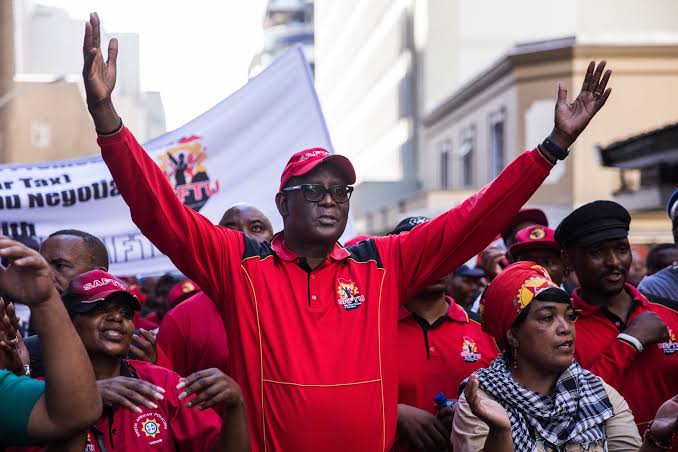
I speak from the accumulated experience of almost four decades in the leadership of the South African trade union movement: from COSATU locals, to regional leadership, to national organiser, to Deputy General Secretary, to fifteen years as General Secretary of COSATU, and now as General Secretary of SAFTU.
That experience has placed me inside almost every major debate of democratic South Africa.
- The RDP.
- GEAR.
- Privatisation.
- Labour-market restructuring.
- Industrial policy.
- Austerity.
- State capture.
- The crisis of the Alliance.
- The birth of SAFTU.
- The weakening of the working class.
I therefore speak not as someone looking back from the comfort of hindsight.
I speak as someone who was there when these battles were fought.
And I want to state the central argument plainly.
The working class was correct to warn that abandoning the transformative spirit of the Freedom Charter, Morogoro, and the RDP would bring South Africa to the precipice where we now stand.
I do not say that in triumph.
There is nothing to celebrate when workers are vindicated by mass unemployment, hunger, and despair.
But history must be honest.
Workers warned against neoliberalism.
Workers warned against GEAR.
Workers warned against privatisation.
Workers warned against labour broking.
Workers warned against premature trade liberalisation.
Workers warned against austerity.
Workers warned against commercialising public goods.
Workers warned that a democracy that does not transform the material conditions of the majority would one day face a crisis of legitimacy.
Today, thirty-two years after democracy, those warnings can no longer be dismissed as slogans.
They must be confronted as history.
The dream of liberation
The National Democratic Revolution was never meant to be merely about changing who occupies the Union Buildings.
Workers did not fight simply to change the colour of those who govern.
Workers fought to change the conditions under which they live.
The Freedom Charter was not an academic text.
It was a covenant with the oppressed.
It promised that the people shall govern.
That the people shall share in the country’s wealth.
That the land shall be shared among those who work it.
That there shall be work and security.
That there shall be houses, security, and comfort.
That the doors of learning and culture shall be opened.
That there shall be equal justice.
The ANC Strategy and Tactics adopted at Morogoro sharpened this further. It warned that in South Africa, more than in most oppressed countries, liberation would be meaningless unless the wealth of the land returned to the people as a whole.
It warned that allowing existing economic interests to retain their power intact would not even represent the shadow of liberation.
That was not ultra-left rhetoric.
That was the ANC at Morogoro.
That was the liberation movement, understanding that political power without economic transformation would betray the deeper meaning of freedom.
The RDP then became the bridge between dream and government.
It was the Freedom Charter translated into a programme.
Housing.
Water.
Electricity.
Jobs.
Land.
Industrial development.
Education.
Healthcare.
Public transport.
Regional development.
Democratic participation.
The tragedy is that the RDP has disappeared from our political vocabulary.
Instead of reconstruction, we speak of fiscal consolidation.
Instead of redistribution, we speak of investor confidence.
Instead of public goods, we speak of cost recovery.
Instead of solidarity, we speak of markets.
That ideological shift matters.
It is at the heart of the crisis.
What has democracy achieved?
Let us be fair.
Democracy changed South Africa.
Apartheid was defeated.
Universal suffrage was won.
A progressive Constitution was adopted.
Workers’ rights were entrenched.
The apartheid labour market was transformed through the Labour Relations Act, the Basic Conditions of Employment Act, the Employment Equity Act, the Skills Development framework, and other laws.
Millions gained access to housing.
Millions gained access to electricity.
Millions gained water.
Millions receive social grants.
These gains are real.
They were not gifts.
They were victories won through struggle.
They must be defended.
But we must also tell the truth.
Access without affordability is not liberation completed.
A house without work nearby condemns workers to long and expensive travel.
Electricity that exists but cannot be afforded does not fulfil the Freedom Charter.
Water that is connected but priced beyond the poor does not represent dignity.
Public transport that collapses forces workers into expensive alternatives.
A Constitution that promises rights cannot satisfy a hungry child.
So yes, democracy delivered important advances.
But from the standpoint of the working class, it failed to complete the transformation that gave those advances their meaning.
The working-class verdict
Thirty-two years later, South Africa is on a precipice.
Not because nothing changed.
That would be false.
But because the structures that reproduce poverty, unemployment, and inequality remain fundamentally intact.
More than thirteen million South Africans are unemployed by the expanded definition.
This is not a statistic.
It is a national catastrophe.
It means young people waking up every morning with nowhere to go.
It means graduates sending CVs into silence.
It means parents are unable to feed their children.
It means pensioners supporting entire households.
It means workers accepting any wage because unemployment has become a weapon.
It means unions are weakened because millions are outside stable employment.
It means despair.
The greatest betrayal of democratic South Africa has been the normalisation of mass unemployment.
We speak about unemployment as if it were weather.
As if it simply happened.
It did not simply happen.
It is the result of choices.
Choices to abandon a decisive industrial strategy.
Choices to liberalise prematurely.
Choices to allow deindustrialisation.
Choices to tolerate labour broking and casualisation.
Choices to discipline public expenditure instead of mobilising the state to create work.
The Freedom Charter promised work and security.
Millions have neither.
Hunger in a land of plenty
Perhaps nothing exposes the failure of the National Democratic Revolution more painfully than hunger.
South Africa is a country capable of feeding its people.
Yet millions experience food insecurity.
Millions skip meals.
Children suffer from malnutrition and stunting.
Workers increasingly cannot afford nutritious food even when they are employed.
Here, we must be careful with statistics because different institutions measure different things.
Stats SA measures poverty and household food access in one way.
SALDRU and academic researchers often measure poverty and deprivation differently.
The Pietermaritzburg Economic Justice and Dignity Group measures the cost of a basic and nutritious food basket.
Oxford’s multidimensional poverty approach looks beyond income to broader deprivation.
These are not contradictions.
They are different windows into the same crisis.
The working-class experience of poverty is not a methodology.
It is the question: Can I feed my child tonight?
Workers did not struggle for political freedom to queue for food parcels.
They did not fight apartheid so that children could arrive at school hungry.
Hunger is not charity work.
Hunger is a political economy.
It is about wages.
Jobs.
Land.
Food prices.
Transport costs.
Social grants.
Corporate concentration in the food system.
Climate change.
And the failure to use the democratic state decisively to ensure that no child goes to bed hungry.
The land, housing, and apartheid geography
The land question remains unfinished.
But we must not reduce land only to commercial agriculture.
Land is also an urban question.
Millions have moved from rural areas, former Bantustans, and apartheid labour reserves into cities searching for work.
They arrive in cities built by apartheid to exclude them.
They settle in informal settlements because land and housing are unavailable or unaffordable.
They live far from jobs.
They spend hours and large portions of their income travelling.
They remain trapped in apartheid geography.
So, when the Freedom Charter says the land shall be shared among those who work it, we must hear that as a rural and urban demand.
It is about farms.
But it is also about cities.
It is about housing.
It is about transport.
It is about spatial justice.
It is about whether workers can live near opportunity.
Public transport is a class question
For decades, the organised trade union movement has argued that public transport is not a luxury.
It is a working-class necessity.
From COSATU to SAFTU, we have demanded a publicly accountable, reliable, safe, integrated, and affordable public transport system.
The collapse of commuter rail was one of the greatest attacks on workers’ living standards.
In Gauteng and the Western Cape, millions who depended on trains were forced into more expensive transport.
Every extra rand spent on transport is a rand taken from food, school needs, electricity, or healthcare.
Every extra hour on the road is an hour stolen from family life, rest, and community participation.
The rebuilding of the rail must be welcomed.
But we must be clear: public transport cannot be left to the logic of profit.
It is a public good.
The state and justice
The working class also experiences the state through policing, courts, Home Affairs, municipalities, clinics, schools, labour centres, and public transport.
That is why the state of the state matters.
A weak state hurts the poor first.
The rich can buy alternatives.
They can buy private security.
Private healthcare.
Private education.
Private transport.
Senior counsel.
Forensic accountants.
Delaying tactics.
The poor cannot.
When the police fail, the poor suffer.
When detectives are weak, the poor suffer.
When prosecution collapses, the poor suffer.
When courts are delayed, the poor suffer.
When Legal Aid is overstretched, the poor suffer.
Justice has increasingly become stratified by class.
The rich can litigate for years.
The poor are told to wait.
The Freedom Charter promised equal justice.
But equal justice requires more than beautiful constitutional language.
It requires a functioning criminal justice system.
It requires detection.
Investigation.
Forensics.
Prosecution.
Conviction.
Protection of women and children.
Protection of workers in townships and informal settlements.
Crime is not only a security issue.
It is a class issue.
The global balance of forces and our choices
We must also be historically honest.
The democratic breakthrough happened at a terrible moment in world history.
When the Freedom Charter was adopted, when the SACP drafted The Road to South African Freedom, when Morogoro met, the world still had a socialist bloc.
There was a contest between systems.
Capital was not as arrogant as it later became.
By 1994, the Soviet Union had collapsed.
Eastern Europe had collapsed.
The world entered a unipolar moment.
Thatcher and Reagan had already helped unleash neoliberal globalisation.
Capital became mobile.
States competed to attract investment.
Trade unions weakened globally.
Inequality rose.
The share of income going to workers came under pressure.
Privatisation, deregulation, outsourcing, and austerity became the language of the age.
South Africa entered democracy at the high tide of neoliberalism.
That is an objective fact.
But comrades, objective conditions do not abolish political choice.
Liberation movements are not judged only by the constraints they inherit.
They are judged by the choices they make within those constraints.
And here the working class must be clear.
GEAR represented a decisive rupture with the RDP.
It shifted the centre of gravity from reconstruction and redistribution to fiscal discipline, liberalisation, and market confidence.
The trade union movement warned that this would not deliver the promised jobs.
We warned it would weaken industrialisation.
We warned it would deepen inequality.
We warned it would strengthen capital at the expense of labour.
Thirty years later, history requires an honest reckoning.
The issue is not to shout, “we told you so.”
The issue is to ask why the warnings from workers were ignored.
The 2008 crisis: the fork in the road
The 2008 global financial crisis gave the world a lesson.
It was the worst capitalist crisis since the Great Depression.
Capitalism itself was rescued by the state.
The United States, where the crisis began, abandoned free-market dogma when its own system was threatened.
It used massive monetary intervention.
It used a stimulus.
It used public power to stabilise the economy.
Much of Western Europe chose austerity.
South Africa followed too closely the austerity path.
Instead of using the crisis to launch a bold programme of reindustrialisation, infrastructure expansion, public employment and redistribution, we moved increasingly towards fiscal consolidation.
The VAT increase to 15% became a symbol of that choice.
The burden fell on workers and the poor.
The result was weak growth.
Weak investment.
Deepening unemployment.
Falling confidence.
A state increasingly unable to meet the demands of society.
The organised labour movement argued for a different route.
We argued for state-led development.
Industrial policy.
Infrastructure.
Redistribution.
Employment creation.
Support for domestic production.
A stronger public sector.
We were not listened to.
Today, the evidence is written in the lives of workers.
The recomposition of the working class
But we must also look at ourselves.
The working class of today is not the same working class that defeated apartheid.
Factories have closed.
Mines have shed jobs.
Permanent work has declined.
Labour broking, outsourcing, casualisation, and platform work have grown.
Remote work has changed the workplace.
Workers are more fragmented.
They are harder to organise.
Millions are unemployed and have never experienced union culture, political education, or workplace democracy.
This is fundamental.
The motive force of the National Democratic Revolution has been restructured.
Trade unions cannot simply organise as if we are still in the 1980s.
The working class now includes permanent workers, precarious workers, informal workers, platform workers, unemployed workers, domestic workers, farm workers, community health workers, young graduates without work, and pensioners supporting households.
If unions organise only those in permanent employment, they will become representatives of a shrinking minority of the class.
The future of trade unionism depends on organising the whole working class.
The weakening of solidarity
Material crisis produces political consequences.
When people lose hope, they search for explanations.
If progressive organisations are weak, reactionaries provide answers.
That is why we see:
- xenophobia.
- Afrophobia.
- Ethnic chauvinism.
- Regionalism.
- Racism.
- Sexism.
- Personality cults.
The liberation movement once united people across tribe, language, and race.
Workers entered factories as Zulu, Xhosa, Sotho, Tswana, Venda, Tsonga, Coloured, Indian, and white workers.
They emerged as comrades.
That unity did not fall from heaven.
It was built through organisation and political education.
Today, those institutions have weakened.
The ANC has weakened.
Unions have weakened.
Civics have weakened.
Youth formations have weakened.
Political education has weakened.
In that vacuum, old backward identities return.
We see people chanting against “Shangaans.”
We see ethnic voting patterns hardening.
We see migrants blamed for unemployment they did not create.
Our fallen heroes must be turning in their graves.
They did not die for tribalism.
They did not die for xenophobia.
They did not die for Afrophobia.
They did not die so that the poor can attack the poorer while capital escapes untouched.
Psychological liberation
This is where Fanon and Biko remain indispensable.
Fanon warned that colonialism does not only occupy land.
It occupies the mind.
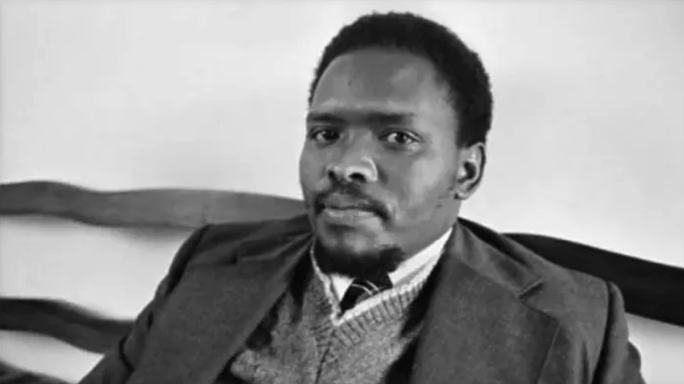
Biko warned that the most potent weapon in the hands of the oppressor is the mind of the oppressed.
Political liberation did not automatically complete psychological liberation.
The collapse of Black solidarity is one of the most painful signs of this unfinished task.
When Black suffering becomes normal to us, something has gone terribly wrong.
When we are unmoved by the suffering of Black children at traffic lights, but moved immediately when whiteness cries on television, Fanon is speaking to us.
When Africans turn against other Africans, colonialism is still alive in the mind.
When the oppressed police one another instead of confronting the system that oppresses them, the revolution remains incomplete.
The moral crisis
We must also speak about values.
The liberation movement once celebrated sacrifice.
Modesty.
Service.
Collective leadership.
Ubuntu.
Today, too often we see crass materialism.
Opulence.
The abuse of office.
Politics as a route to accumulation.
Union positions were fought over because of investment companies, travel claims, and access to resources.
Leadership contests shaped by money rather than political grounding.
The class composition of leadership has changed.
Many leaders no longer live where workers live.
They no longer use the services workers use.
Their children do not attend the schools that workers use.
Their daily life is no longer the life of the class they claim to represent.
This matters.
Social location shapes consciousness.
A leadership that lives far from workers can begin to speak left while living right.
That is one of the dangers confronting liberation movements and trade unions alike.
Renewal
So where does this leave us?
It leaves us with one conclusion.
The National Democratic Revolution must be renewed,or it will become a historical slogan.
Renewal cannot mean nostalgia.
It cannot mean repeating old phrases.
It must mean returning to the core promise of liberation.
Work.
Land.
Food.
Housing.
Public transport.
Public services.
Equality.
Justice.
Solidarity.
Socialism.
A renewed NDR must rebuild the developmental state.
- It must abandon austerity.
- It must reindustrialise.
- It must tax wealth.
- It must stop illicit financial flows.
- It must discipline capital.
- It must rebuild public transport.
- It must treat water, electricity, health, education, and transport as public goods.
- It must confront hunger as a national emergency.
- It must rebuild political education.
- It must organise the unemployed and precarious workers.
- It must defend migrants while demanding lawful and humane migration management.
- It must pursue regional integration because no wall can defeat poverty.
- It must rebuild the moral authority of leadership.
- It must restore the working class as the leading force of transformation.
Comrades,
The Freedom Charter was our dream during the nightmare of apartheid.
The RDP was the first attempt to turn that dream into government.
But during the dream of democracy, millions of workers and poor people have lived a new nightmare of unemployment, hunger, inequality, unaffordable services, crime, and despair.
That is the contradiction we must confront.
This paper is not an apology for failure.
It is not a rejection of the democratic breakthrough.
It is a working-class call for honesty.
Democracy gave us political freedom.
But political freedom without economic justice remains unfinished.
The generation that defeated apartheid fulfilled its mission.
Our generation must complete the unfinished tasks of liberation.
And that means saying clearly:
- The working class was not wrong to demand a different path.
- We were not wrong to defend the RDP.
- We were not wrong to oppose GEAR.
- We were not wrong to oppose privatisation.
- We were not wrong to oppose labour broking.
- We were not wrong to oppose austerity.
- We were not wrong to insist that the wealth of this country must serve the people as a whole.
The task now is not to mourn what was lost.
The task is to rebuild.
To organise.
To educate.
To unite.
To fight.
And to ensure that the promise of the Freedom Charter becomes not a memory of what we once dreamed, but the lived reality of every worker, every child, every community, and every person who calls South Africa home.
I thank you.
For media inquiries, contact the National Spokesperson at
Newton Masuku
newtonm@saftu.org.za
0661682157
Media Officer
Asive Dyani
0719019564