The Siyafana Sonke Campaign salutes the residents of Thembelihle informal settlement in the South of Johannesburg, Lenasia, who continue to defend the values on which their community was built: solidarity, dignity and the right of all people to live without fear. Thembelihle was born out of struggle. It emerged because poor and working-class people, denied access to land and housing, refused to disappear. They built homes with their own hands, organised collectively and defended their right to exist. That history continues to shape the political identity of the community today.
For more than two decades, Thembelihle became known nationally for its powerful civic movement. The Thembelihle Crisis Committee (TCC) demonstrated that ordinary residents could organise democratically to challenge forced removals, demand services and defend their community. Like many grassroots movements across South Africa, however, Thembelihle has not escaped the broader crisis facing popular organisation. Years of state neglect, unemployment, political fragmentation, repression and the daily struggle to survive have placed enormous pressure on community structures and collective action. This crisis has not happened by accident. As government has failed to provide decent housing, jobs and basic services, poor communities have increasingly been left to manage deepening social and economic crises on their own. At the same time, capitalism continues to profit from cheap and precarious labour, including the super-exploitation of migrant workers from Malawi, Zimbabwe and Mozambique. Instead of confronting those responsible for inequality and unemployment, opportunistic politicians encourage poor and working-class people to turn against one another.
Xenophobia is one consequence of this politics of division. The Siyafana Sonke Campaign therefore seeks not only to oppose xenophobia, but to rebuild solidarity and democratic community organisation so that residents can collectively confront the challenges they face. It was in this spirit that progressive organisations gathered on 22 June to reflect on the state of the TCC and the urgent task of rebuilding democratic community leadership. Participants, including the TCC, ZASO, Abahlali baseFreedom and Ikhwezi Labantu, committed themselves to strengthening participatory structures rooted in the everyday concerns of residents. They agreed that resisting xenophobia must go hand in hand with helping communities organise themselves, develop local leadership and build collective solutions to shared problems.
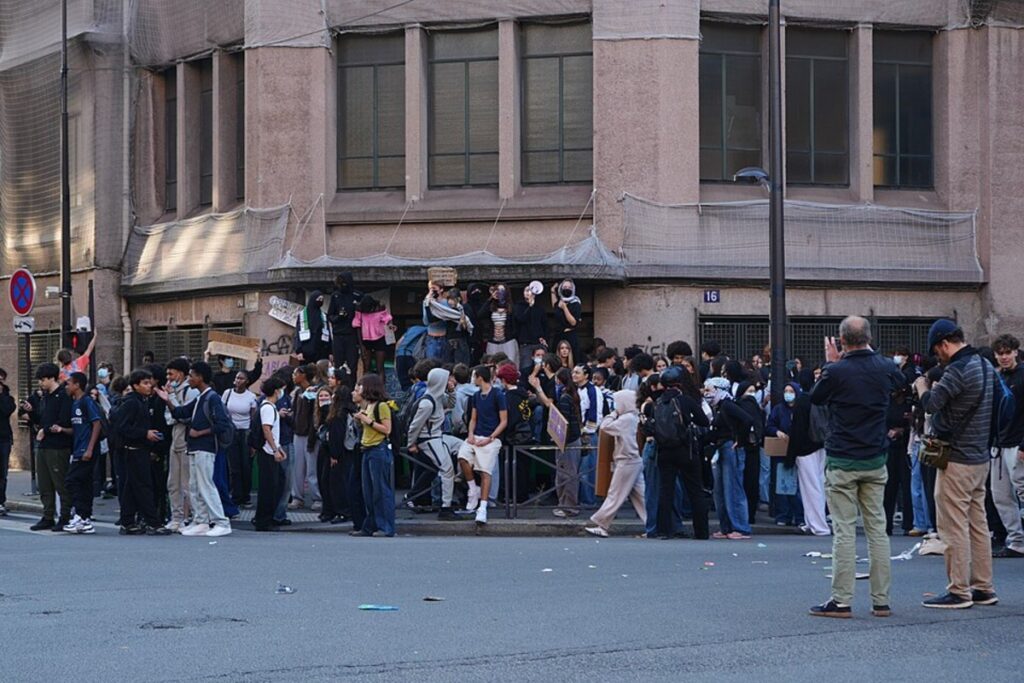
Throughout the weekend of 27 and 28 June, activists conducted door-to-door outreach and community discussions across Thembelihle, encouraging unity between South Africans and migrants. On Sunday, 28 June, after gathering at Park Station, known to many as People’s Parliament, the Thembelihle Crisis Committee convened a mass meeting attended by more than 300 residents, including South Africans and Malawians living in the settlement. The meeting affirmed a simple but important principle: safety and dignity will not be achieved through hatred, but through collective organisation and solidarity, but this did not prevent members of the community from also expressing xenophobic ideas. Following the mass meeting, a Malawian resident was stabbed in an attack which, like many others connected to March and March, blurred the line between xenophobic violence and opportunistic criminality. This was not an isolated incident. Malawian residents in particular continue to face intimidation and violence fueled by those who seek to blame migrants for the failures of government and the inequalities of our society.
Yet the response from Thembelihle points towards a different future.
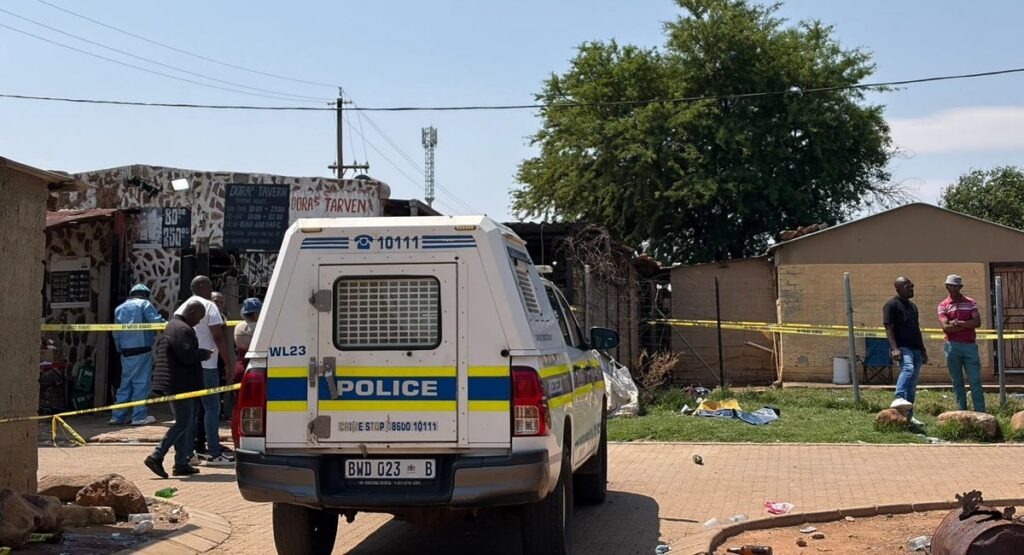
In the early hours of Thursday morning, at around 2 a.m., criminals broke into a shack in an attempted robbery. A nearby resident immediately raised the alarm, waking neighbors who mobilised collectively and prevented the attackers from escaping until the police arrived. Ambulances attended the scene, while community members ensured that those responsible were handed over to the police and that those injured received medical attention. South African residents acted together with migrants from Malawi, Zimbabwe and Mozambique. Community members have established joint night patrols, carrying whistles to alert neighbours whenever crime occurs. This revives a long tradition of community self-organisation in Thembelihle, where residents have previously organised collective patrols to protect one another during periods of insecurity. The lesson is clear: communities become stronger when they organise across nationality, not when they are divided by it.
Migrants are not outsiders threatening Thembelihle. They are workers, neighbours, parents, organisers and active defenders of the community. They stand shoulder to shoulder with South Africans in confronting crime, protecting one another and strengthening the democratic traditions that have long defined Thembelihle. The Siyafana Sonke Campaign believes that the struggle against xenophobia is inseparable from the struggle to build organised, democratic and confident communities. Our task is not only to respond when violence erupts, but to empower residents to organise meeting by meeting, street by street and settlement by settlement so that they can exercise collective power, hold both the state and private interests accountable, and shape their own future. The future of Thembelihle will not be secured by politicians seeking easy scapegoats, nor by violence against migrants. It will be secured by rebuilding the solidarity that first made this community possible. The struggle that built Thembelihle was never about nationality. It was, and remains, a struggle for land, housing, dignity and the right of all who live here to exist without fear.
Siyafana Sonke.
Thembelihle was built through struggle. It will be defended through unity.
An injury to one is an injury to all.
Issued by the Siyafana Sonke Campaign Contact Siphiwe: 062 003 1437 Or Luke: 072 609 4980
For reporting incidents of violence: E-mail as much detail as possible to report@xenowatch.ac.za or WhatsApp 063 839 0124