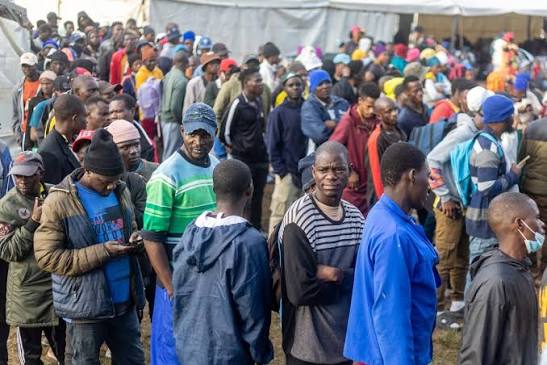
According to community reports, a woman was raped during an apparent housebreaking in Thembelihle this past weekend. A criminal case has been opened and the survivor received medical attention.
This is not only the story of a terrible crime. It is a warning about the direction in which our communities are being pushed.
Too often, discussions about xenophobia focus only on marches, slogans and public demonstrations. Yet the consequences do not end when people disperse. The politics of division continues long after the crowds have gone home. It enters working-class neighbourhoods, informal settlements and townships. It enters the lives of people already struggling with unemployment, poverty and insecurity. Most disturbingly, it enters the home itself.
The home should be a place of safety. Increasingly, for many women, migrants and poor families, it is becoming a place of fear.
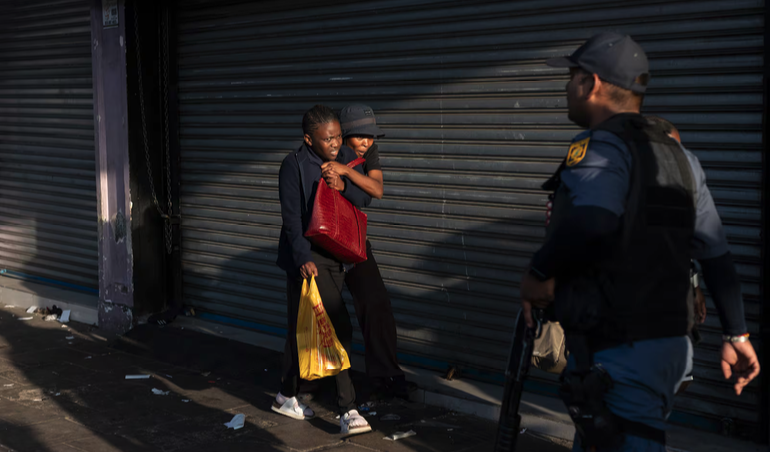
Whether acts of violence are committed in the name of xenophobia, criminal opportunism or a combination of both, they cannot be separated from a political climate in which vigilantism is normalised and communities are encouraged to decide who belongs and who does not. Slogans such as Abahambe are not merely expressions of political frustration. They contribute to a language of exclusion that can embolden intimidation and violence against those who are already among the most vulnerable.
This is not to suggest that every individual who participates in anti-migrant mobilisation is responsible for every subsequent act of violence. It is to recognise that political language matters. When exclusion becomes normalised, its consequences extend far beyond organised demonstrations.
We are equally disturbed by reports from community activists that undocumented migrants have, on previous occasions, been told they could not open criminal cases. Every person living in South Africa has the right to protection from violence. Access to justice cannot depend on nationality or immigration status. If people begin to believe that some lives are less worthy of legal protection than others, the rule of law itself is weakened.
The crisis confronting communities such as Thembelihle was not created by migrants. It is rooted in unemployment, deepening inequality, collapsing public services and the daily struggle to survive. Yet instead of directing understandable anger towards the institutions and policies responsible for these conditions, opportunistic politics encourages working-class people to turn against one another. Neighbours become enemies while those with political and economic power escape accountability.
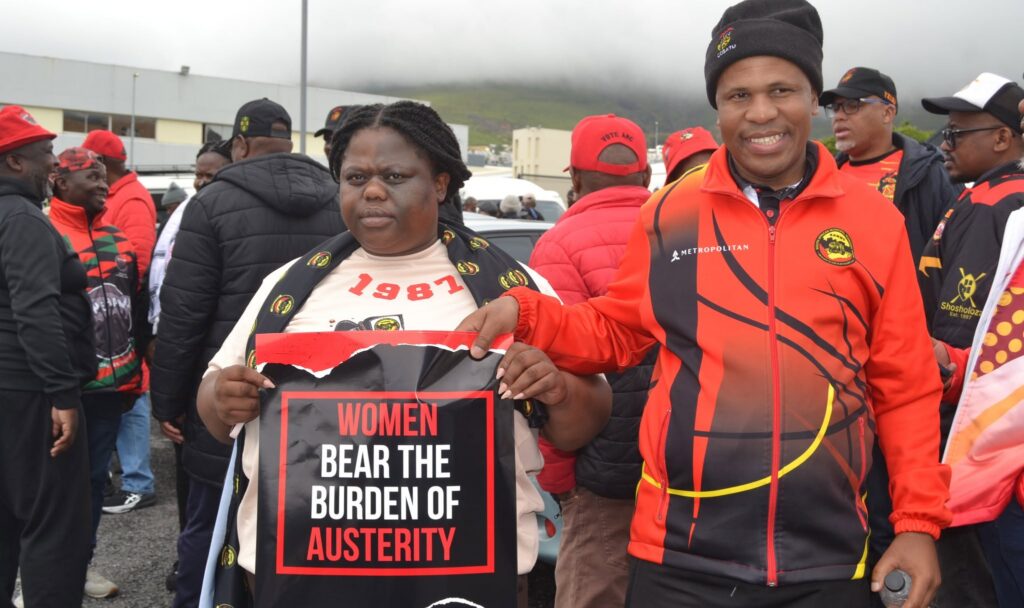
Women frequently bear the heaviest burden of this politics of division. When insecurity enters the home, it is often women who experience assault, coercion and violence. For migrant women, these vulnerabilities may be compounded by fear of reporting crimes or seeking protection. A movement committed to justice cannot confront one form of domination while ignoring another. The struggle against xenophobia must also be a struggle against gender-based violence, just as the struggle for economic justice must be inseparable from the struggle for human dignity.
The answer to crime is not vigilantism. The answer to unemployment is not scapegoating. The answer to violence against women is not silence.
There is another path.
In recent weeks, residents of Thembelihle have organised across nationality to defend one another, revive community patrols and rebuild democratic organisation. South Africans and migrants have worked together to respond to crime, strengthen neighbourhood solidarity and confront the conditions that divide communities. This reflects the history upon which Thembelihle itself was built: a history of collective struggle for land, housing and dignity, not one of exclusion.
That experience offers an important lesson. Communities become stronger when they organise together around their shared material interests rather than being encouraged to fear one another. Division weakens the working class. Solidarity builds the collective power needed to demand jobs, housing, public services and accountable government.
This is why the struggle against xenophobia cannot be separated from the struggle for democracy, equality and social justice. It is not enough simply to condemn violence after it occurs. We must challenge the political conditions that make such violence easier to justify and harder to resist.
Trade unions, civic organisations, women’s organisations, migrant-led organisations, faith communities, student organisations and all progressive South Africans have an important role to play. We must reject every attempt to pit South Africans against migrants, men against women, neighbour against neighbour and community against community. The politics of division serves those who benefit from inequality; solidarity serves those who seek to transform it.
The politics of division has entered our homes. The task before us is not only to resist it, but to rebuild the democratic, united and caring communities capable of defeating it.
Luke Sinwell is a Professor of Sociology at the University of Johannesburg. Siphiwe Mbatha is an active member of the Thembelihle Crisis Committee (TCC) a civic movement that fights for the rights of all regardless of nationality.