Keep Left/Socialism from Below statement
There is no migration crisis. There is a crisis of capitalism.
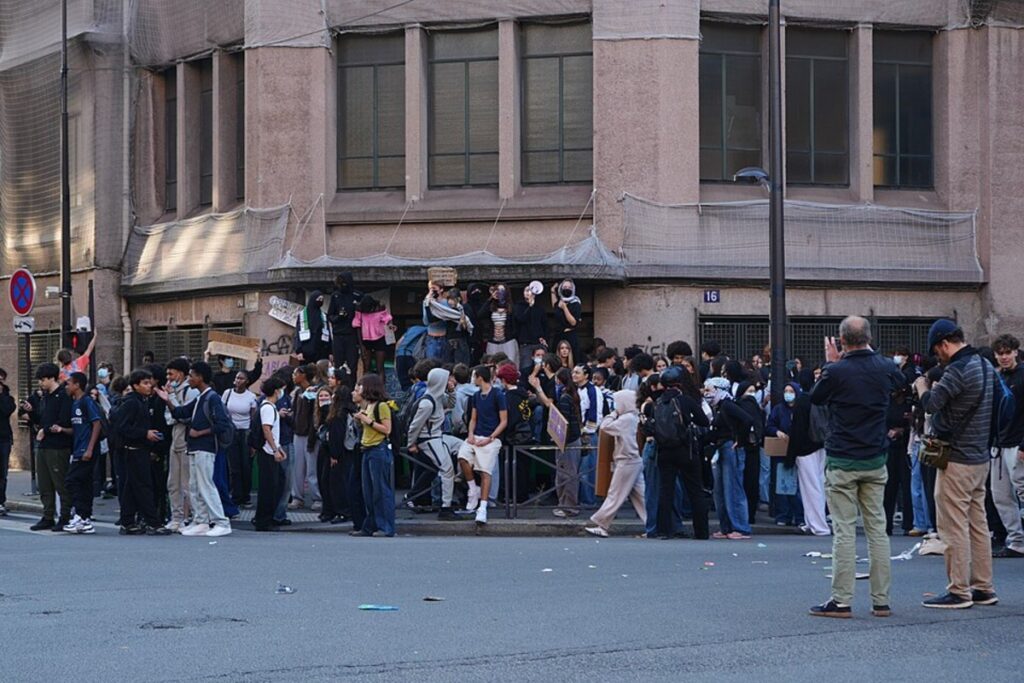
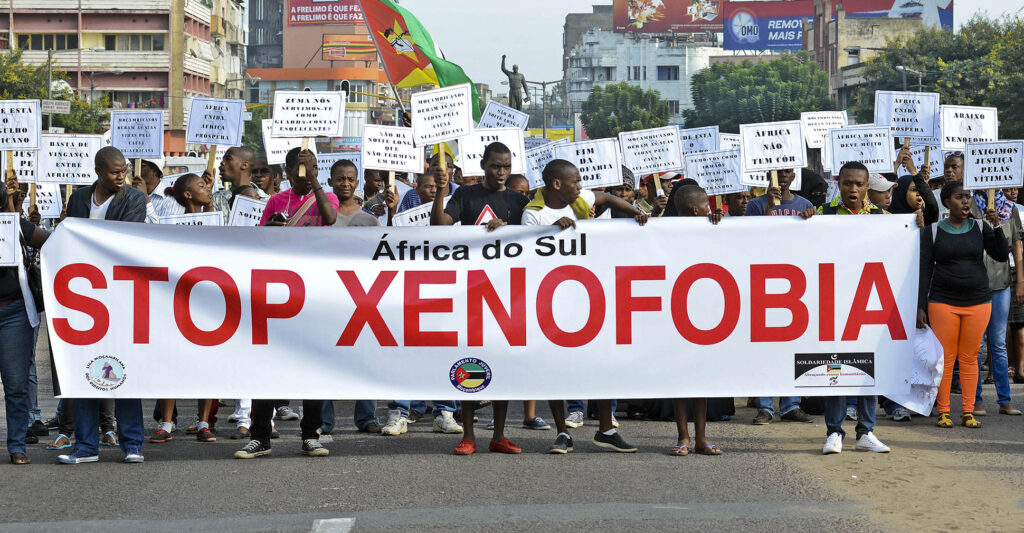
The violent events of 30 June remind us that xenophobia is a weapon used to divide the working class and excuse our rulers’ failings.
South Africa’s crisis is rooted in an economic system that concentrates wealth in the hands of a few while condemning millions to unemployment, poverty and failing public services.
Directing anger towards Zimbabwean, Malawian, Mozambican and other African migrants will not solve any of this because no part of this is caused by the average migrant, and it protects those who did cause it.
Documents do not determine a person’s humanity. But this is how ruling classes preserve their power: by turning the anger created by inequality away from the system that produces it and towards other working-class people. Instead of confronting the billionaires, corporations and political elites who profit from exploitation, workers are encouraged to see one another as the cause of their suffering.
The language of citizenship, borders and “illegal foreigners” becomes a political weapon that divides the working class into those who are considered to belong and those who are excluded.
Government spent R600 million on an armed response for the 30th, but we have no illusion that it was to protect migrants. On the contrary, everyone in migrant-rich areas along the routes of ‘authorized’ and ‘unauthorized’ marches was terrorized, putting to rest the fantasies of a peaceful movement for ‘legality’. Breakaways from a huge contingent hurled bricks through many windows in Yeoville and Hillbrow, hitting a toddler in their home, tried to loot several bottlestores, and beat people they caught on the street, without immediate consequences or acknowledgement by the media or police.
The Joburg metro was complicit: they approved marches through these areas and police did not try to divert unauthorized marches from those areas. Police co-operated with vigilantes in Germiston and refused to use rubber bullets on a crowd setting fire to Jeppe in Johannesburg.
Metros, municipalities and national government departments, long the best equipped and most eager to harass cross-border migrants, have fanned the flames in the months and decades leading up to the vigilante deadline. They have intensified deportations, dragged their feet on renewing visas, forcibly removed vendors’ street stalls, welded shut migrant shopkeepers’ doors or confiscated keys, and back-pedaled rapidly on legal responsibilities to refugees.
No, this pricey deployment of the army into Hillbrow was not for our safety but because the once-ruling party fears any challenge to its authority as many factions and splinters contest it inside and out. The tendency to fragmentation increases precipitously as political entrepreneurs squabble for a larger slice of a shrinking pie, emboldened by the ANC’s decay.
The current scapegoating crisis is directly related to the local government elections scheduled for November. Government is keen to shift attention from its failures while a plethora of new parties with no real solutions to the crisis look for easy pickings as they jostle for a position at the trough that government has become.
Across the world, we are witnessing a resurgent authoritarian politics that seeks to control movement, harden divisions and decide whose lives are valued.
The current wave of xenophobic mobilization in South Africa works as a political distraction. While public attention is redirected towards migrants, the real crises confronting South Africa and its state continue to deepen: the need for accountability following the Madlanga Commission’s findings on policing and state accountability; the unresolved questions surrounding Phala Phala; worsening unemployment, inequality and public sector failure; and South Africa’s responsibility to oppose the genocide in Gaza. Instead of confronting these crises, sections of the political establishment seek to manufacture an “immigration crisis”.
Yet migrants did not create unemployment, failing services or poverty. These are the consequences of a system that prioritises profit over human need. Many migrants have built their lives in South Africa because economic collapse, political repression, conflict or climate crisis left little to return to. Migration is as old as humanity, and under capitalism people are often forced to move in search of safety and survival. Like the struggle of Palestinians in Gaza, this is fundamentally about resisting the idea that entire peoples can be excluded or treated as less than human.
The struggle against xenophobia is therefore part of a wider struggle against the dehumanisation of Black and brown people and the denial of people’s right to belong and exist. Socialists stand for internationalism, not the dead-end of nationalism.
We reject door-to-door inspections, vigilantism, and demands for identity documents. An identity document should not be a dompas. We know from previous waves of xenophobic violence that attacks on migrants do not stop there but deepen fear, division, disruption and violence throughout working-class communities. The rise in attacks on migrant-owned businesses, on informal settlements and in anti-migrant rhetoric by sections of the political class should concern everyone committed to democracy and working-class solidarity.
We are keenly aware of the danger of a violent, right-wing movement in the streets legitimized by its links to participation in formal politics. although there are many fractures possible in the future of this unholy alliance.
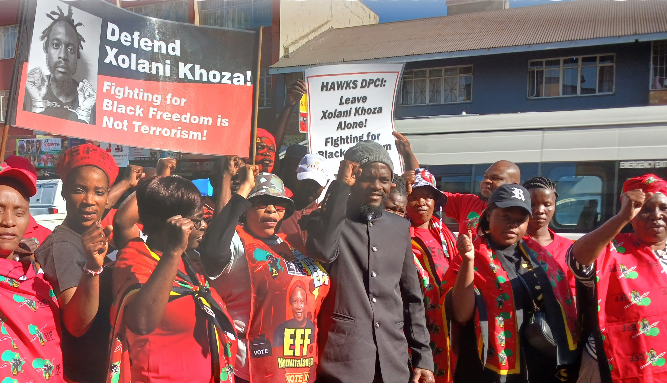
Unlike in previous periods, many grassroots organisations capable of resisting xenophobia have been weakened. Yet this moment also creates the conditions to rebuild them. Keep Left/Socialism From Below is committed to strengthening and reconnecting community organisations, trade unionists, socialist organisations and social movements capable of resisting xenophobia while fighting for jobs, housing, healthcare, education and democratic control over our communities.
We stand alongside organisations such as Siyafana Sonke, Lawyers for Human Rights, KAAX, faith-based organisations and, above all, grassroots organisations in townships and informal settlements resisting both state neglect and vigilante violence.
The capitalist class is divided when competing for profits, but it unites when workers challenge its power. Workers cannot fight in isolation when the forces that exploit us operate globally. There is no substitute for organised working-class power. Our task is to rebuild democratic, mass-based organisation from below that unites workers across every border in the struggle for a socialist society.
We demand:
- End xenophobia, vigilantism and ethnic chauvinism.
- Defend every person’s right to live, work and organise in dignity, regardless of nationality.
- No to door-to-door policing, intimidation or revival of apartheid-style pass law politics.
- Jobs, housing, healthcare, education and decent public services through redistribution of wealth, not scapegoating.
- Tax the rich, challenge corporate power.
- Fight for democratic public ownership under workers’ and community control.
- Rebuild democratic, mass-based organisations in workplaces and communities capable of challenging both capital and the state.
- Unite workers across borders in the struggle for socialism from below.
No borders between workers. No bosses over workers. An injury to one is an injury to all.
Socialismfrombelow@gmail.com